Iron-rich first foods for babies
最後更新 2026年10月1日
僅英文
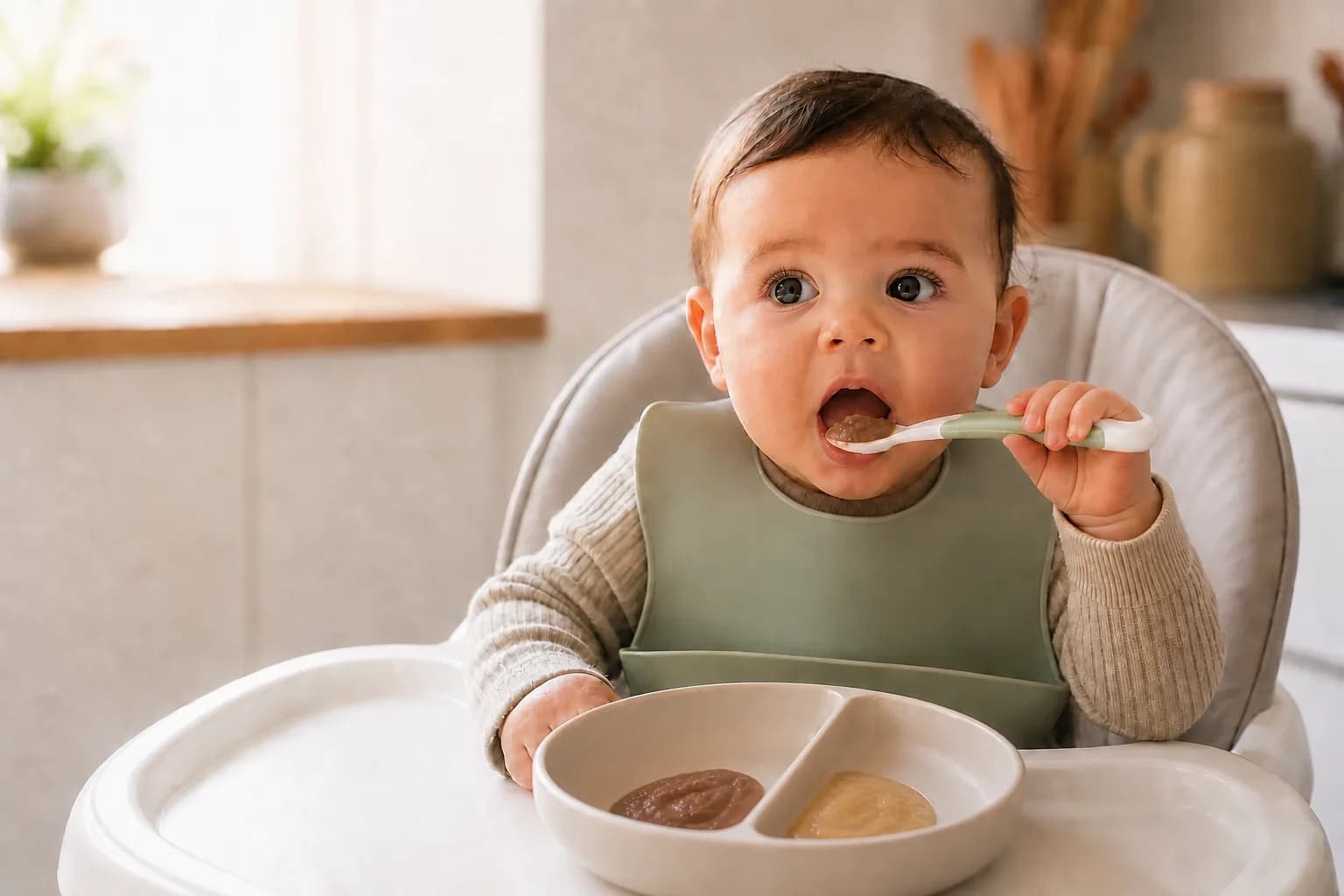
Healthy full-term babies are born with enough iron, together with what they get from breast milk or formula, for roughly their first six months. After that the store runs down and iron has to come from food. Breast milk contains very little iron and infant formula is fortified with it, but from around six months neither is enough on its own, which is why iron-rich foods are worth choosing from the start of weaning.
Why does iron matter from six months?
A baby builds most of their iron reserve in the last three months of pregnancy. How much they start with depends on factors including gestation, birthweight, their mother's iron status in pregnancy and when the cord was clamped. By around six months that reserve is falling and their needs are rising, so iron has to arrive on the tray.
This matters slightly more with baby-led weaning than with purées, because early self-fed portions are tiny. A baby learning to grip is not eating much, so what they do manage is worth choosing deliberately.
A baby short of iron can look pale and seem tired, irritable or off their food, and may gain weight slowly. All of these have plenty of other causes, so mention them to your health visitor or GP. Only a blood test confirms iron deficiency.
What if your baby was born prematurely?
If your baby was born early, this article is only a starting point. Babies born before 37 weeks have had less time to build an iron store, and they are usually advised iron supplements. Your neonatal team, GP or health visitor will know the dose and how long your baby needs it.
Do not start or stop an iron supplement on your own.
Which first foods carry iron?
These are some of the foods in our catalogue with at least 1mg of iron per 100g. It is a selection: shellfish and seasonings clear the same bar on paper without being sensible ways to get iron into a baby.
| Food | Iron per 100g | As measured | Type |
|---|---|---|---|
| Beef | 2.6mg | Cooked, lean | Meat |
| Egg | 1.8mg | Raw egg, not a serving suggestion | Egg |
| Tofu | 5.4mg | Steamed | Plant |
| Oats | 3.8mg | Dry | Plant |
| Lentils | 3.3mg | Boiled | Plant |
| Chickpeas | 2.9mg | Boiled | Plant |
| Spinach | 2.7mg | Raw | Plant |
| Peanut butter | 1.9mg | As sold | Plant |
| Peas | 1.5mg | Raw | Plant |
Read the middle column before comparing rows. Oats are weighed dry, and 100g of dry oats makes several times that weight as porridge, while lentils, chickpeas, tofu and beef are weighed cooked and spinach is weighed raw: 100g of raw spinach cooks down to a couple of spoonfuls. The rows are not like-for-like servings. The 1mg cut-off is ours, not a published standard. Use the table to find candidates, not to work out what your baby took in.
The egg figure is for raw egg and says nothing about how to serve it. Egg and peanut butter come with their own serving rules, so read their cards before you offer them.
Why does meat count for more than the table suggests?
The table shows how much iron is in each food, not how much a baby absorbs. Haem iron, found almost entirely in meat and other animal foods, is the form the body takes up most readily (SACN, 2018). Iron from plants, leafy greens included, is absorbed less well, so the spinach row overstates what a baby gets. Egg is an animal food but its iron is not haem iron, so read the egg row as you would a plant row.
If your family eats meat, soft-cooked beef or lamb is an easy way in. For plant sources, serve them with something rich in vitamin C, such as red pepper, tomato or a few strawberries. The NHS says to "include some vitamin C with your meal to help your body absorb iron".
How do you serve iron-rich food to a six-month-old?
Most iron-rich food is either too tough to gnaw or too wet to hold, and a six-month-old grips with a whole fist and cannot open it to get at anything inside.
Cook meat until it is well done, with no pink left (the FSA's cue for cooked-through meat). To get beef or lamb soft, cook it slowly in a casserole or with a little liquid until it breaks apart with a fork. Offer it as a thick strip to gnaw, or finely minced and mixed into a soft meal, as the card below describes. Mince is easier to manage in a sauce or bound into a soft patty than as dry crumbs. Whatever you offer should squash easily between your finger and thumb (more in what is baby-led weaning).
For anything wet, such as lentils, porridge, hummus (made with tahini, a sesame food, so read that card) or iron-fortified cereal, load a spoon and hold it out handle-first for your baby to take, as in when can a baby have lentils. That is still self-feeding, and it is how food that will not hold its shape reaches a baby who cannot yet use a spoon.
Do you need an iron supplement?
Not without being told to. A GP confirms iron deficiency with a blood test and sets the dose. The NHS warns that very high doses of iron can be fatal, particularly in children, so a bottle bought off the shelf and dosed by guesswork is a real risk. If you are worried, talk to your health visitor or GP.
Does anything work against iron?
Cow's milk is the one to watch. SACN links using unmodified cows' milk as a main drink before 12 months with lower iron status, and the NHS says it "should not be given as a drink before 12 months". That rule is about milk as a drink; the card below says what it allows in cooking.
SACN also notes that starting cows' milk at around six months has been associated with small losses of blood from the gut.
Tea works against iron too. Tannins in some teas stop iron being absorbed, and the NHS advises adults to avoid tea or coffee around main meals. For a baby ordinary tea is ruled out anyway: the NHS says caffeine is not suitable for babies or young children.
What if your baby is vegetarian or vegan?
If your baby is vegetarian, egg can still supply iron. On a vegan diet every iron source is a plant one, and the NHS says iron from plant foods is absorbed less well than iron from meat, so serve pulses, tofu and iron-fortified cereal with something rich in vitamin C.
Vitamin B12 needs separate attention. The NHS says sources for vegans are limited and that a vitamin B12 supplement may be needed. Ask your GP or health visitor what your baby should have, and whether you need one too if you are breastfeeding. They can also refer you to a paediatric dietitian if you would like help planning the whole diet.
Iron and vitamin D
Vitamin D matters at this age too, but it is hard to get enough from food alone, so the advice is a daily supplement rather than a shopping list. That has its own guide.
Try to include something iron-rich in your baby's meals, serve plant foods with vitamin C, and keep cow's milk out of the beaker as a drink until 12 months. If your baby seems unusually pale or tired, tell your health visitor, and if they were born early, ask your team about iron.