Baby-led weaning safety: gagging, choking, cutting
Last updated October 2, 2026
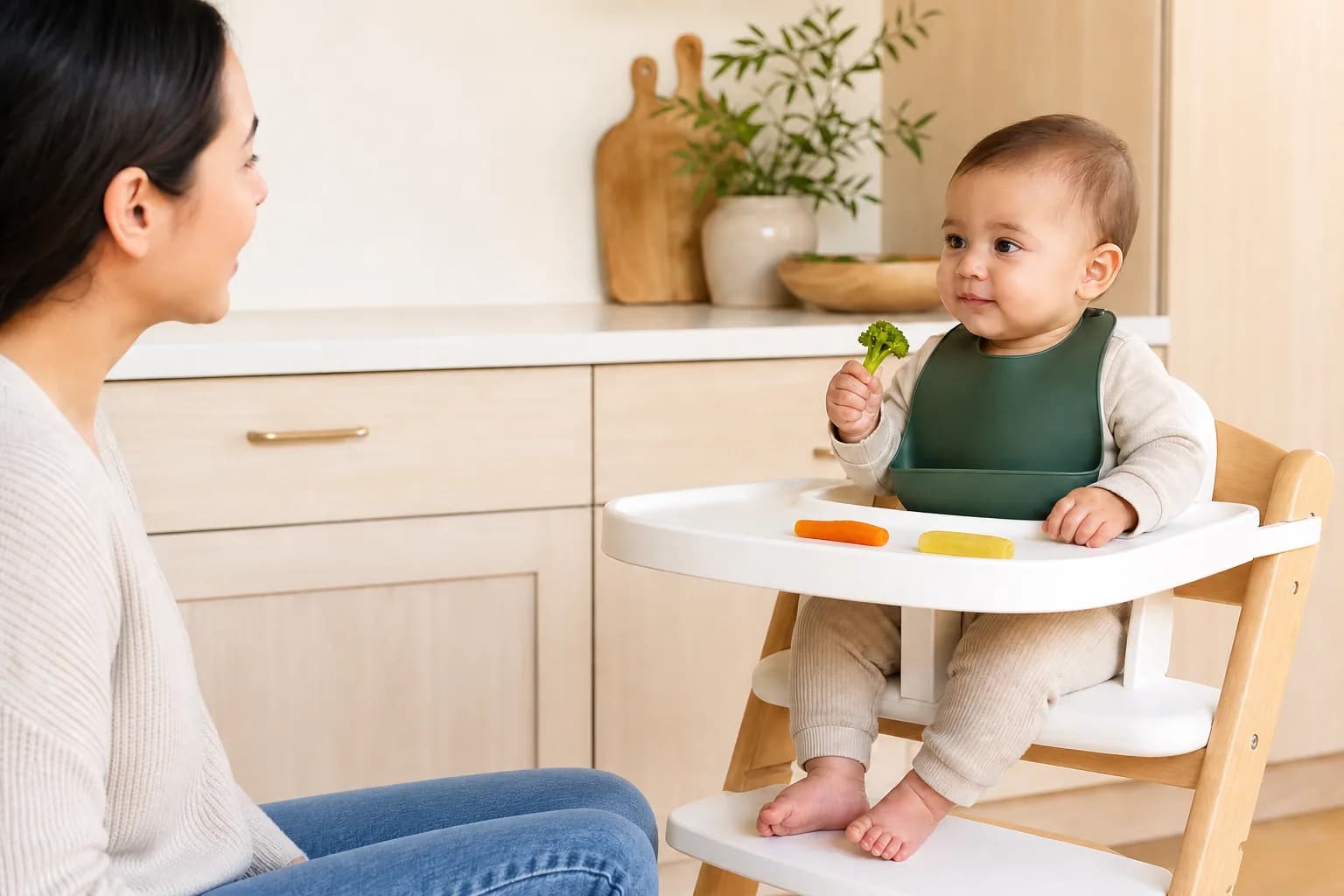
The NHS puts the difference between gagging and choking this way: gagging is loud, choking is quiet. This page covers what to do if a baby chokes, how to cut food and seat your baby, and the foods to leave out. It covers the common cases, not every food.
What is the difference between gagging and choking?
The NHS calls gagging "a normal reflex as your baby learns to chew and swallow solid foods", and says: "Gagging is loud." Your baby's eyes may water, they may push their tongue forward, retch or vomit.
Choking is different. The NHS says: "Choking is quiet." The British Red Cross puts it plainly: a choking baby "won't be able to cry, make noise, cough or breathe". If your baby has white skin it may begin to look blue. On darker skin, the NHS says "their gums, inside their lips, or their fingernails may begin to look blue".
If gagging worries you, mention it to your health visitor.
What do you do if your baby is choking?
- If your baby is coughing loudly, encourage them to keep coughing and stay with them. A loud cough is their own way of bringing it up.
- If the cough is silent, or they cannot breathe in properly, shout for help. If you can see the object, try to remove it, but do not poke blindly with your fingers: you can push it further in.
- Sit down and lay your baby face down along your thigh or forearm, supporting their head and neck with your hand. Give up to 5 sharp back blows with the heel of your hand between their shoulder blades, checking after each one whether the object has come out.
- If it has not, lay your baby face up along your thighs, feet towards you and head lower than their feet. Put 2 fingers in the middle of their chest, just below the nipple line, and give up to 5 sharp pushes, checking after each one.
- Call 999 if the blockage has not come out. Keep repeating the back blows and chest thrusts until help arrives, and do not leave your baby.
- If your baby becomes unconscious, put them on a firm, flat surface, call 999 with the phone on speaker, and start CPR. The NHS shows how in how to resuscitate a child.
- Even if the object comes out, get medical help. Part of it may have been left behind, or your baby may have been hurt by the back blows or thrusts.
These steps follow the NHS page on how to stop a child from choking. The British Red Cross and St John Ambulance publish their own baby choking guides.
It is worth learning this in person before you start. Your health visitor can tell you where.
How should you cut food for a baby?
The NHS says to "cut it into narrow batons, and avoid round shapes and firm foods", and suggests "soft, cooked sticks" of vegetables and fruit such as broccoli, sweet potato, carrot, apple or pear. A steamed broccoli floret with the stalk left on is an easy shape to hold.
Round foods need cutting down. For small round fruit the NHS is explicit:
How should they sit?
Upright in a highchair, alert and with the harness fastened. The NHS says to "always supervise babies and young children while they're eating", and never to leave a baby unattended on a raised surface. Stay in the room while they eat.
Which foods should you leave out for now?
Honey, before twelve months
Added salt
Salt turns up in stock cubes, gravy, soy sauce and cured meats.
Whole nuts, before five years
Hard raw vegetables
Cow's milk as a main drink, before twelve months
More rules from the NHS list of foods to avoid
- "Shark, swordfish and marlin should not be given to children under 16 — the mercury in them can affect the development of a baby's nervous system."
- "Raw or lightly cooked shellfish — mussels, clams, oysters — increase the risk of food poisoning, so do not give it to babies. Cook shellfish and fish through."
- "Mould-ripened soft cheese, ripened goats' milk cheese and soft blue cheese carry a higher listeria risk. Pasteurised hard cheese, such as mild cheddar, is fine from 6 months."
- "Popcorn, marshmallows, jelly cubes, hard sweets, gum and ice cubes are choking hazards for young children."
- "Plant-based drinks are not suitable as a main drink before 12 months. Rice drinks specifically: avoid under 5 years (arsenic)."
- "Added sugar risks tooth decay and is not needed. Fruit juice counts."
For how the method works, see what baby-led weaning is. The first foods index lists which of these rules apply to a given ingredient.