What to eat with canned fish

Last updated September 9, 2026

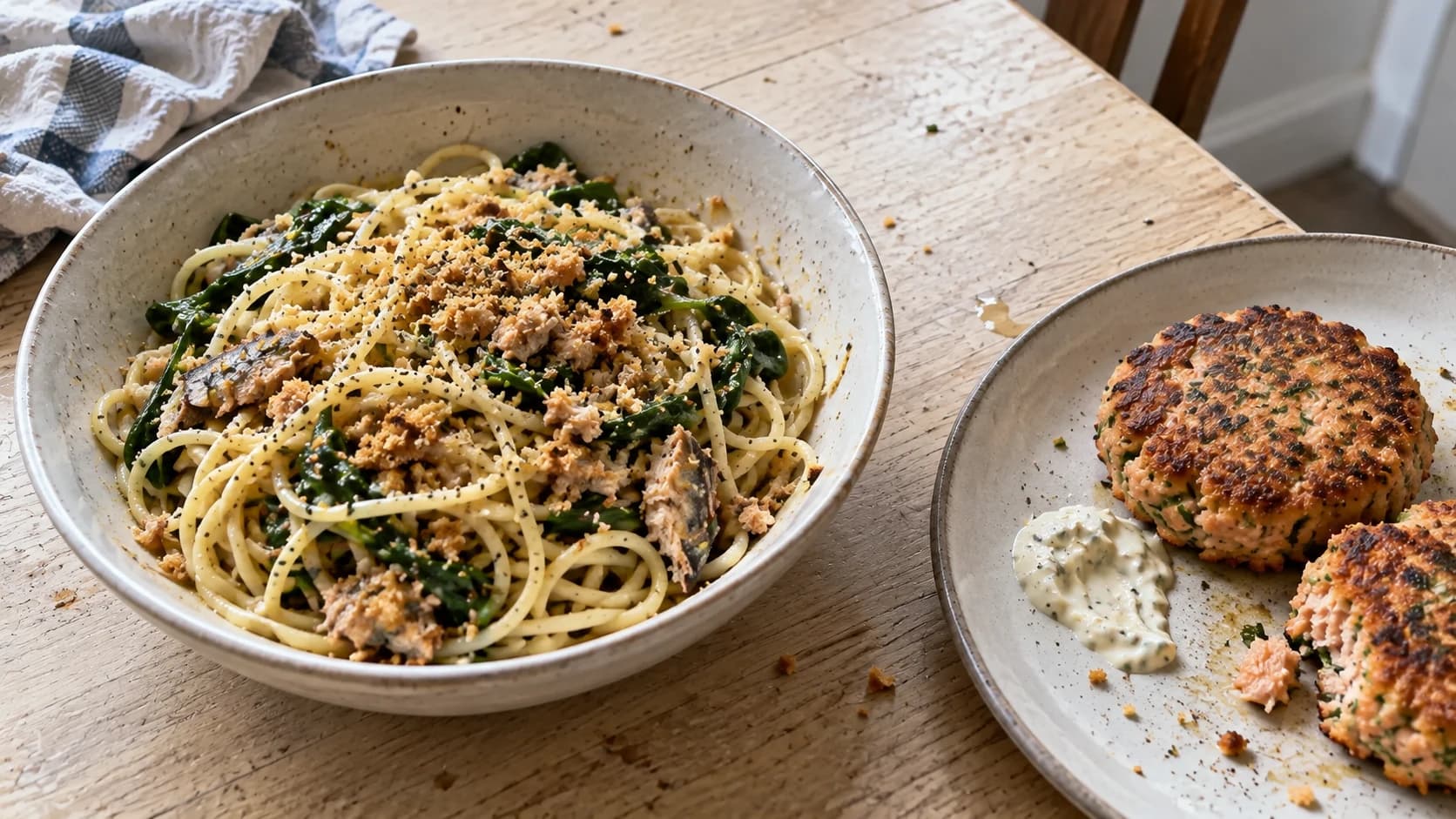
A plate of salmon patties beside a bowl of sardine spaghetti

Eat canned fish with the carbohydrate and flavour direction you already have: choose pasta when you want a quick, loose dinner, or make patties when you want a crisp-edged plate. The useful question is not what canned fish ought to taste like. It is whether tonight needs a pan of pasta or something you can shape, fry and serve with a side.

That decision keeps dinner small. You do not need to turn a cupboard can into a project or find a specialist ingredient to justify opening it. Start with the kind of meal you want, then use what is already nearby to make it feel finished.

Should you make pasta or patties?

Make pasta when you want dinner to come together in the pan; make patties when you want contrast between a crisp outside and a softer centre. Neither route is a fallback. They simply ask different things of the rest of your kitchen.

Pasta is the better choice when a packet is already in the cupboard and you have the attention for one active pan. It can take a salty or sharp note well: capers, lemon, herbs, chilli, olive oil or butter all give the fish somewhere to go. If you are following a pasta recipe, the last stage matters. The guide to finishing pasta in its sauce explains how to use the pan, rather than the plate, to bring it together.

Patties make more sense when you have something that can help the fish hold a shape and you want dinner to feel more like separate components. A crisp vegetable, a salad, or a sauce with some sharpness gives the plate a clear counterpoint. There is no need to copy a side dish exactly; use the recipe as the structure and let the rest of the meal answer what is in the fridge.

What should you add to canned fish?

Add one base, one point of contrast and one thing that makes the meal feel complete. This is a cooking framework, not a required shopping list.

If you haveUse it for
Pasta, rice, bread or potatoesThe base that turns the fish into dinner
Lemon, vinegar, pickles, capers or mustardA sharp note that stops the meal feeling flat
Greens, tomatoes, cucumber or another vegetableFreshness, texture or colour on the plate
Breadcrumbs, crackers, flour or an eggA way to give patties structure, if that is the route you choose
Yoghurt, mayonnaise, butter or olive oilA richer element when the meal needs one

You do not need every row. Choose the pieces that answer the meal in front of you. Pasta and fish may only need something sharp and a handful of greens. Patties may need a binding ingredient and a side, but not necessarily a sauce. The goal is a deliberate combination, not a fully stocked larder.

When is sardine spaghetti the right answer?

Choose the sardine spaghetti when you have one can of sardines and want a dinner for two in about 25 minutes. It is the direct answer to a cupboard night: the can supplies the fish, pasta supplies the base, and the recipe gives you a defined route from both to a meal.

This is also the useful option when you want the fish to disappear into the logic of the sauce rather than sit as a separate item on the plate. That does not mean hiding it. It means letting the pasta carry the dinner, with the fish as part of each forkful.

If the day is too warm for a long spell at the hob, the same decision belongs beside these dinners for a week too hot to use the oven. The principle is the same: keep the cooking purposeful, then let the cupboard do some of the work.

When should you make salmon patties?

Choose salmon patties when you have two cans of salmon and want a 20-minute dinner with a crisp edge. This is the better route when you want to cook the fish as an object: shape it, cook it, then decide what belongs alongside it.

The published recipe deliberately keeps some quantities imprecise. Treat that as permission to pay attention to the mixture rather than chase a false level of precision. Add only what you need to make patties you can shape, and choose a side that brings another texture to the plate.

The salmon ingredient guide is a useful place to find the ingredient's wider catalogue context. For this dinner, though, the only decision you need to make first is practical: do you have the two cans, time for a pan, and something you would like to eat beside a crisp patty?

How do you make the meal feel finished?

Finish the plate by adding the thing the main dish does not already provide. For pasta, that is often crunch, freshness or a sharper flavour. For patties, it is often a side with bite, a sauce, or something green. You are looking for contrast, not a second recipe.

Try asking a short set of questions before you start. Does the meal need a base? Does it need something sharp? Is there a vegetable that would be better eaten tonight than tomorrow? The answers can be modest: toast beside a patty, a few leaves stirred through pasta, or sliced cucumber on the plate. Small additions make the dinner read as intentional.

What is the shortest way to decide tonight?

Choose sardine spaghetti if you have pasta, one can of sardines and want to feed two. Choose salmon patties if you have two cans of salmon and want a crisp-edged dinner in 20 minutes. If neither route matches what is in the cupboard, keep the framework: start with a base, add a contrast, and stop once the plate has enough texture and flavour to feel like dinner.

That is the point of keeping canned fish around. It gives you a useful starting point on the nights when the best plan is simply to cook with what is already there.

Written by

  • Mag Shum

    Mag eats, occasionally taking on the challenge of making a dish or two. Co-founder of Nourishible, driven to rescue real food from meaningless, endless doom scrolling.