How to finish pasta in its sauce
Last updated October 2, 2026
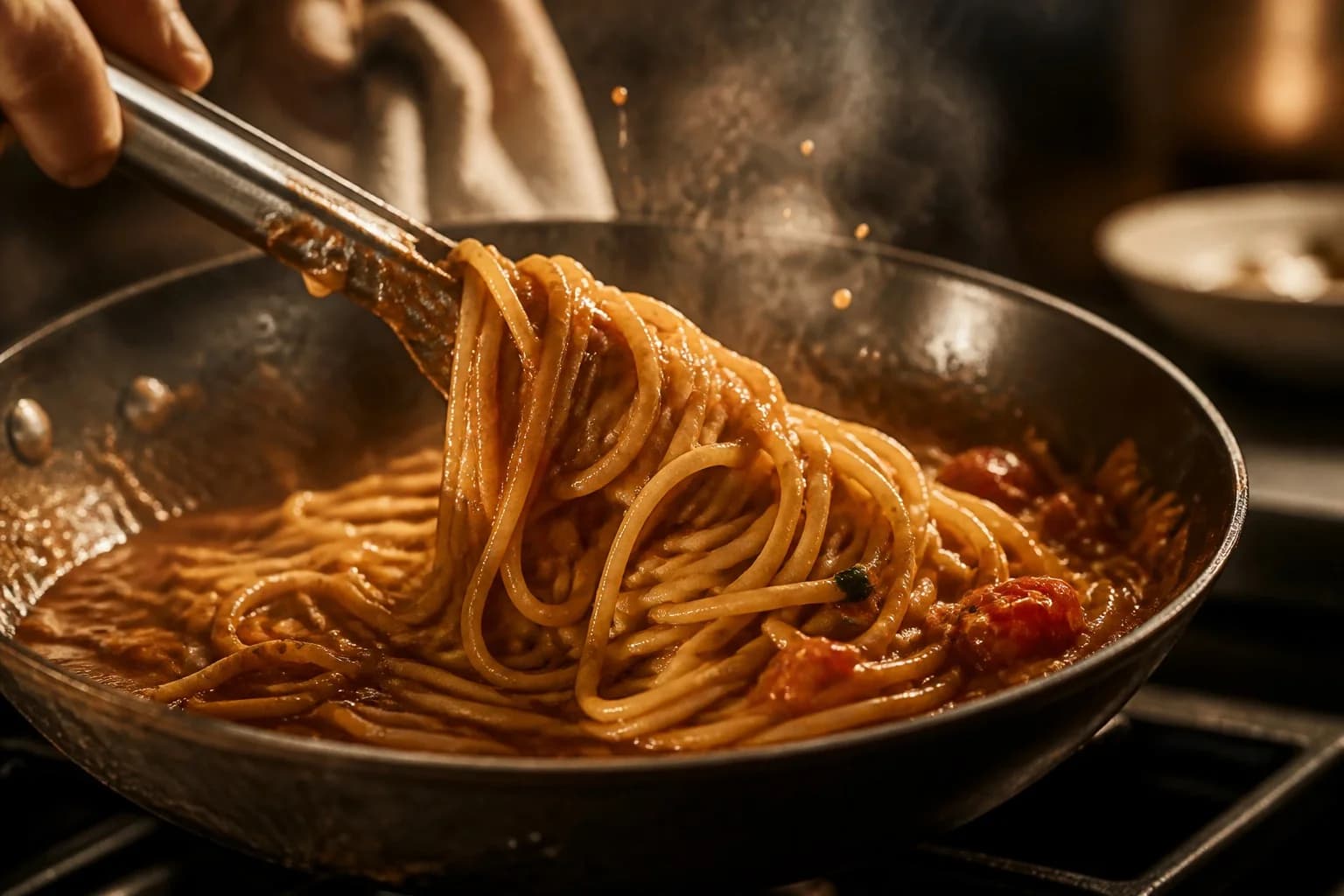
Finishing pasta in its sauce means moving it out of the boiling water before it is fully cooked, then completing the last few minutes in the sauce. The pasta absorbs flavour, releases starch into the pan, and gives you time to adjust the consistency before it reaches the plate.
Why finish pasta in the sauce?
Pasta finished in sauce is coated rather than topped. When drained pasta sits on a plate and sauce is ladled over it, the two tend to separate: bare pasta underneath, liquid around the edge, heavier pieces on top. Tossing them together over heat gives the sauce a chance to cling.
America's Test Kitchen says the method suits thin sauces, including broth- and wine-based ones, especially well. It also helps with sauces that combine fat and water, such as olive oil and tomato or butter and lemon: tossing brings the two together, and the starch from the pasta and its cooking water gives the sauce enough body to hold on.
When should you move the pasta?
Move the pasta when it is flexible but still firm in the middle. Serious Eats says to undercook it by a few minutes before it goes into the sauce, and America's Test Kitchen describes the stage as shy of al dente, still a bit stiff, which Italian cooks call al chiodo, “to the nail”. Go by taste rather than the clock: the centre should resist your bite without crunching.
Have the sauce ready before this point. A cold or unfinished sauce leaves the pasta waiting in a colander, where it sticks and continues softening without gaining flavour. The sauce pan should be wide enough to toss or stir the full portion.
How much pasta water should you save?
Save a mugful before draining, then add it in small splashes. You probably will not use the whole mug. Its first job is to loosen the sauce enough for the pasta to move; its second is to replace water that evaporates while the pasta finishes.
More water is not automatically better. Add a little, toss briefly, then look at the bottom of the pan. If the sauce is tight and the pasta drags, add more. If liquid is pooling, keep tossing over heat before you reach for another splash.
Go lightly with salt when the sauce already contains capers, cheese, cured meat or tinned fish, as the sardine spaghetti below does. The pasta water gets saltier as the sauce reduces. You can add salt at the end; you cannot take it back out.
What should happen in the pan?
Keep the pasta moving while it completes the final stage of cooking. Toss the pan if that feels controlled; otherwise use tongs or a broad spoon. Movement spreads starch and fat through the water instead of leaving oil floating at the edge.
A reliable sequence is:
- Put the nearly cooked pasta into the hot sauce.
- Add a small splash of reserved cooking water.
- Toss or stir over medium heat until the sauce coats the pasta.
- Add another splash only if the pan looks tight.
- Turn the heat down or off before adding delicate cheese or cold butter.
- Taste the pasta itself, then adjust salt, acidity and consistency.
For a tomato sauce, the last stretch in the pan helps the pasta absorb the reduced tomato and garlic. For a butter or oil sauce, it is where the emulsion forms. In both cases, stop while the sauce looks a touch looser than you want: it thickens on the way to the table.
If the sauce starts from tomato paste, the guide to cooking with tomato paste covers that earlier stage.
Which sauces suit the method?
Most pan sauces benefit, but they need different handling.
| Sauce | What the finish needs |
|---|---|
| Tomato | Enough water to loosen the reduced tomato; steady tossing |
| Butter or olive oil | Agitation to combine fat, water and starch |
| Cream | Lower heat and restrained reduction so it does not become heavy |
| Cheese | Heat reduced or removed before the cheese goes in |
| Broth or wine | Works especially well here; the pasta absorbs the thin liquid as it finishes |
Cold pasta salads and baked pasta are different jobs. A salad needs its own dressing strategy; lasagne and pasta bakes continue cooking in the oven. Do not force this method into a recipe whose final texture depends on cooling or baking.
What usually goes wrong?
- Pasta cooked all the way before it meets the sauce is soft by the time it is coated. Pull it earlier.
- Pasta water is not a fixed measure. It changes with the sauce, the pan, the shape and how fast the hob is evaporating it, so add it a splash at a time.
- Rinsing hot pasta throws away the starch and heat the sauce needs. Drain it and move it straight across.
- Hard cheese over fierce heat can seize into threads or grainy clumps. Take the pan off the heat, loosen the sauce with a little water if it is tight, then fold the cheese in.
Which recipes show the technique?
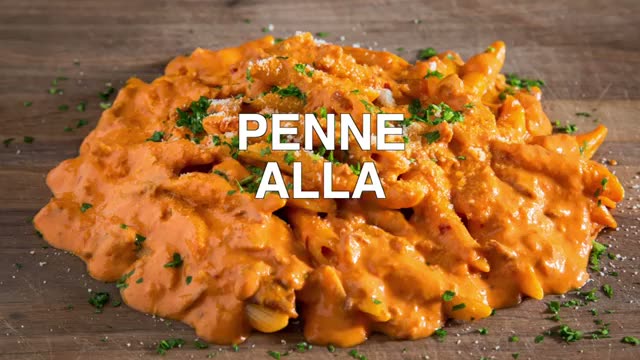
Penne alla vodka uses reserved pasta water to loosen a tomato-and-cream sauce after it has been reduced. The lemon sardine spaghetti uses the same principle with wine, lemon, butter and olive oil. They taste completely different, but the finish in the pan solves the same problem.
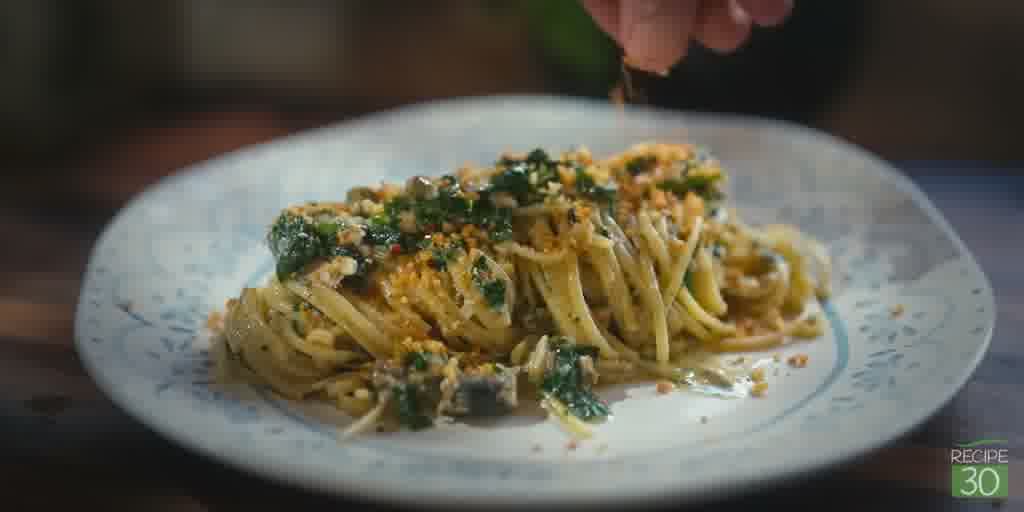
In the sardine spaghetti the pasta comes out “just under al dente”, which is the cue from the top of this guide.