How to add more fibre to everyday meals
Last updated October 8, 2026
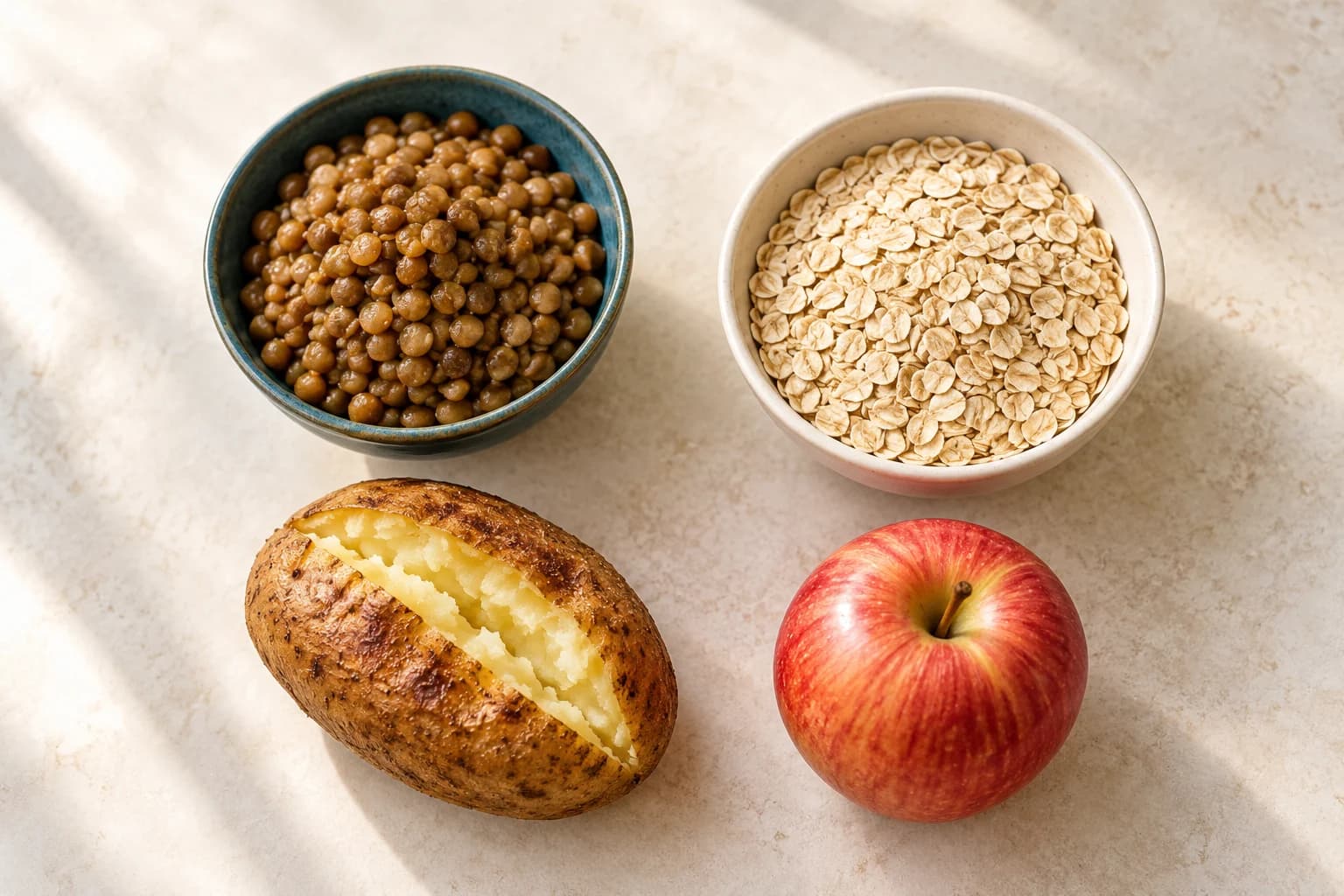
The UK guideline for adults is 30g of fibre a day, according to the NHS. You do not need a new menu to get nearer: change one ingredient in something you already cook. Wholemeal bread for white, lentils or chickpeas added to a stew, curry or salad, or a baked potato eaten with its skin on are all changes the NHS suggests, and none of them changes what the meal is.
What a day can add up to
The NHS fibre page gives three example meals with approximate totals.
| NHS example meal | Fibre |
|---|---|
| 2 slices of wholemeal toast with peanut butter, and a medium orange | about 8.3g |
| Wholemeal spaghetti with lentil and tomato sauce | about 11g |
| Grilled chicken breast, skin-on baked potato, carrots and green beans | about 11.2g |
Added together, the three come to about 30.5g, so on paper a day of higher-fibre versions of familiar meals can reach 30g. That sum is ours, not the NHS's. The NHS itself calls its examples illustrations, because the fibre in any food depends on how it is made and how much you eat.
Six swaps
Pick the row closest to something you cook already. These are lunch, dinner and side-dish changes; breakfast has its own guide.
| Your usual meal | The change | What to know |
|---|---|---|
| Sandwiches or toast | Wholemeal or granary bread | The NHS's 8.3g example breakfast is wholemeal toast with peanut butter and an orange |
| Pasta with tomato sauce | Wholewheat pasta, with cooked lentils in the sauce | This is the NHS's 11g lunch. Tinned cooked lentils go straight in; dried ones are cooked to their packet first |
| Curry or stew | Add cooked chickpeas | The NHS suggests pulses in stews, curries and salads; decide how much sauce you want around them |
| Potato dinners | Keep the skin on | The NHS's 11.2g dinner is a skin-on baked potato with carrots and green beans |
| Rice with a main dish | Brown rice or bulgur wheat | Cook it to the packet |
| A lunch with no vegetables | Add vegetables on the side | Fresh, frozen and tinned all appear on the Eatwell Guide's list |
For a snack, the NHS suggests fresh fruit, vegetable sticks, rye crackers, oatcakes, and unsalted nuts or seeds; an apple is the easy one.
Swap the staple, or add to the dish?
Swap a staple (bread, rice, pasta) when you want the meal to look the same. Add an ingredient (chickpeas in a curry) when the staple is the part you like and you would rather leave it alone. Chickpeas stay in pieces in a stew or salad; lentils can soften into a sauce, depending on the type. If an addition changes the dish more than you like, try another row, such as vegetables on the side rather than stirred through. What to cook with chickpeas is a good next read if a tin is your starting point, and the bean and lentil weeknight dinners guide covers lentils.
Reading the label
On a pack, check whether the fibre figure is per 100g or per serving, and compare products on the same basis. The NHS notes that the fibre in any food depends on how it is prepared and how much of it you eat, so work out your own portion.
Fibre is a daily figure, so one higher-fibre dinner does not have to carry all 30g. The Eatwell Guide likewise says you do not need to get the balance right at every meal, but over a day or even a week. If you have a medical condition or special dietary requirements, it points to a registered dietitian for help adapting it.