How to stop a cream sauce splitting
Last updated October 3, 2026
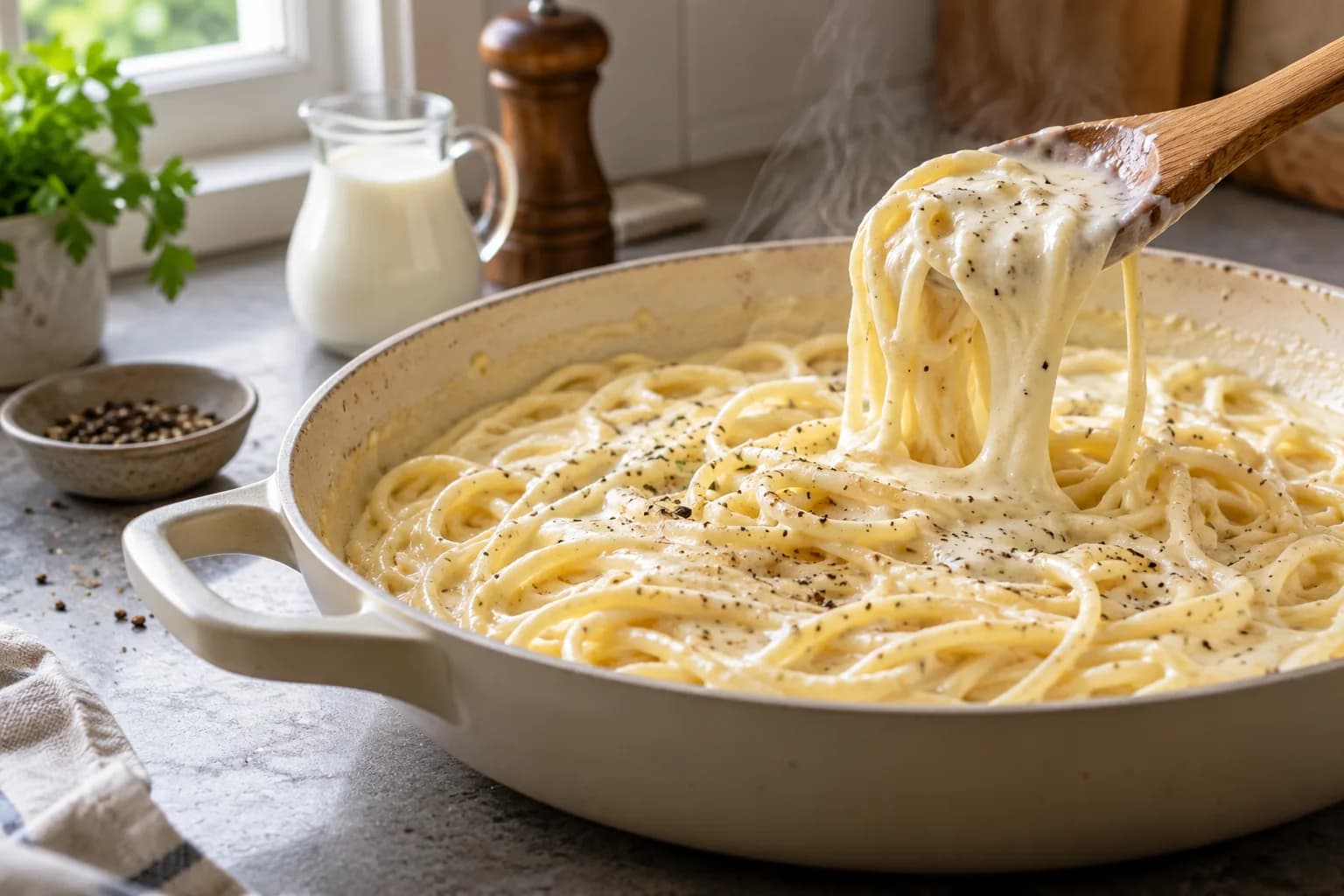
A cream sauce goes grainy when heat or acid clumps the milk proteins, and greasy when it cooks down until there is too little water to hold the fat. Use a richer cream, keep the heat gentle, and add lemon or cheese at the end with the pan off the boil.
Why does a cream sauce split?
Because the milk proteins in cream (caseins) clump together when they are pushed too hard. The Science of Food blog puts it this way: caseins "denature and clump together to form curds when exposed to acidity or high heat". Cream resists this better than milk: it has fewer caseins, and its fat globules interact with them as they begin to denature, which helps stop them clumping, according to the same blog.
Fat is the part you control at the shop. A cream with about 25% fat, the figure the same blog takes from Harold McGee, is rich enough to survive conditions that would curdle milk, and the heavier the cream, the less likely it is to curdle. Heavy cream is the US name; the closest UK match is double cream, and the blog's table lists the two together at 36 to 48% fat.
A split sauce can also be greasy rather than grainy. America's Test Kitchen's explanation for a pan sauce finished with butter or cream: leave it on the heat too long and so much water evaporates that there is not enough left to hold the fat.
What is making yours split?
Find the row that matches what happened in the pan.
| What happened | Why it splits | What to do next time |
|---|---|---|
| The sauce boiled hard | Heat makes the caseins clump | Simmer rather than boil hard. The red pepper recipe below simmers its cream for 3 to 5 minutes, then works the butter into a little of the sauce over medium-low heat |
| Wine, lemon or another acid went in with the cream | Acid makes the caseins clump | Stir lemon juice in a little at a time at the end, off the heat, and taste as you go |
| A lighter cream, or sour cream, went into a hot pan | Less fat means less protection | Choose a richer cream for anything that will simmer. Add sour cream late, or cook a little flour in first |
| The sauce sat on the heat and reduced too far | Not enough water left to hold the fat | Add a splash of water or pasta water and keep it moving |
| Cheese went in while the pan was fierce | Melted cheese loses the protein net that held its fat and water together | Take the pan off the heat, then fold the cheese in |
For cheese, Modernist Cuisine says the protein net breaks apart and the oil and water go their separate ways, and America's Test Kitchen says aged cheeses such as cheddar turn grainy when melted into a sauce.
How do you fix a sauce that has already split?
Greasy and reduced, or grainy and curdled? The fix differs.
- If the sauce is greasy and has reduced a long way, add about a quarter cup (roughly 60 ml) of water, put it back on the heat to a vigorous simmer, and whisk constantly. That is America's Test Kitchen's fix for a broken pan sauce.
- If the cream has curdled, The Kitchen Whisperer reduces about half a cup of fresh heavy cream to a third of its volume, then slowly drizzles the curdled sauce into it, whisking hard. It is one cook's method, so it may not rescue every sauce, but it costs only a little more cream to try.
How do you build a cream sauce that holds?
Cook the cream gently and give the sauce something to hold on to. Three Nourishible recipes show different ways of doing that.
The spicy red pepper pasta sauce simmers the cream with the vegetables for three to five minutes, blends it smooth, and then warms a little of the sauce on its own at medium-low heat. A knob of cold butter goes in until the sauce is glossy. The pasta finishes in the pan with a splash of pasta water, and the pecorino goes in off the heat, loosened with more sauce or pasta water if needed.
The creamy lemon sardine spaghetti has no cream at all. Its creaminess is a butter sauce, which is why it belongs here. The wine and lemon juice reduce by half first, the heat goes fully down, and only then does the butter go in. The sauce is smooth and glossy before the pasta arrives, and reserved pasta water loosens it as you toss.
The creamy mushroom chicken meatballs use sour cream, the lighter and more fragile option. The recipe cooks a tablespoon of flour with the mushrooms and garlic before the water and sour cream go in, then simmers to a creamy sauce. Starch is one way to calm a cream sauce: The Kitchen Whisperer suggests a roux or a cornstarch slurry to stop a cream sauce curdling. The Science of Food takes the other route and adds sour cream late. You can do either: follow the recipe's flour method, or stir the sour cream in at the end.
What should you do with the pasta water?
Use it to loosen the sauce a splash at a time, off a low heat, rather than letting the sauce cook down. The guide to finishing pasta in its sauce covers how much to save and how to toss. It also has a warning that fits here: add hard cheese over fierce heat and it can seize into threads or grainy clumps, so take the pan off the heat first.
Eggs are the other everyday case of proteins reacting to heat. How to stop scrambled eggs going watery covers that one.