How to stop scrambled eggs going watery
Last updated October 2, 2026
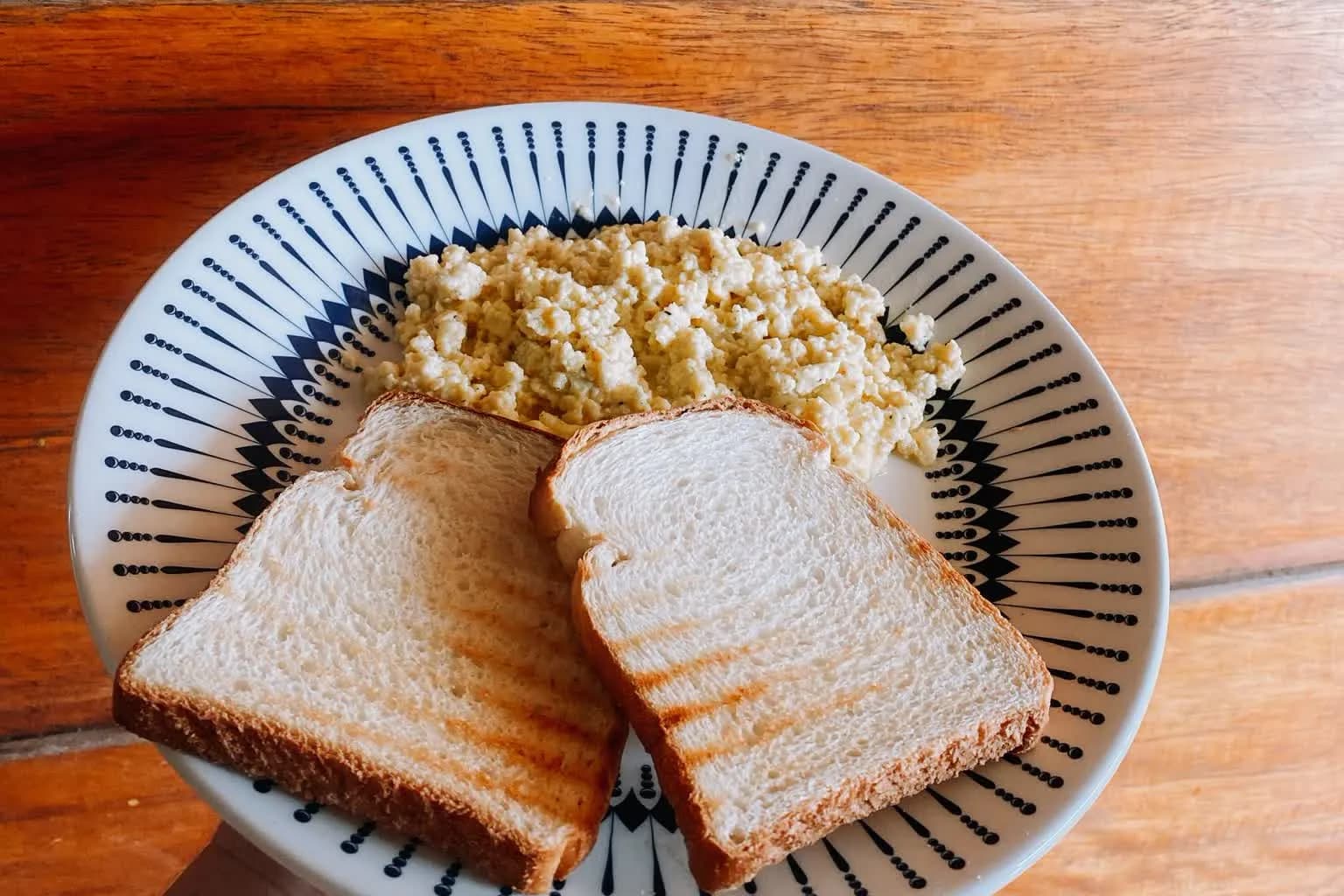
Scrambled eggs go watery for two reasons. Too much heat tightens the egg proteins and squeezes out the water they were holding, or something you stirred in, such as tomato or mushrooms, released its own. Pull the pan while a little liquid egg is still showing, and cook any filling first.
What makes eggs weep
As eggs heat, their proteins unfold and bond into a network that holds water. Push the heat too far and that network tightens until the water is squeezed out, which is the pale puddle under overcooked eggs, as America's Test Kitchen (ATK) explains it.
Fillings are the other culprit. Mushrooms, tomato and spinach all release water as they cook, and ATK says raw vegetables can turn an omelette soggy; scrambled eggs suffer the same way. Cook the filling first so the water leaves before the eggs arrive, stopping while it is still crisp-tender, as ATK advises.
Before the pan
Beat the eggs with a pinch of salt and 1 to 2 teaspoons of milk, cream or water per egg. Salting before cooking, whether just before or well ahead, limits how tightly the proteins link, so the curds stay tender. The splash of liquid dilutes the proteins for the same reason and helps the curds puff.
If there is a filling, cook it first in the pan, keep it crisp-tender and set it aside to add at the end. Cherry tomato scrambled egg works this way. It cooks the tomato into a sauce first and sets it aside, scrambles the eggs separately until just set but still a little wet, then folds the tomato in gently at the end.
The pan and the heat
Use a small frying pan, about 20 cm (8 inches) across. ATK says that size takes up to six eggs, and the smaller surface slows the cooking and gives you more control. Use as much butter as you normally would.
- Melt the butter and wait for it to foam. When the bubbles spread evenly over the surface, pour in the eggs.
- Cook over fairly high heat and keep the eggs moving.
- Stop while they are nearly done, with just a little liquid egg left. Take the pan off the heat, break up any large curds and cover it. The leftover heat sets the last of the egg gently, so the proteins tighten less than if you kept cooking.
If you are cooking for someone who should avoid runny eggs, the guide to runny eggs when eating out sets out who that is.
If they are already weeping
Take the pan off the heat straight away, because more cooking only squeezes out more water. Lift the eggs onto the plate and leave the liquid behind in the pan. Next time, pull the pan a little earlier.