How to build a noodle soup from what you have
Last updated October 7, 2026
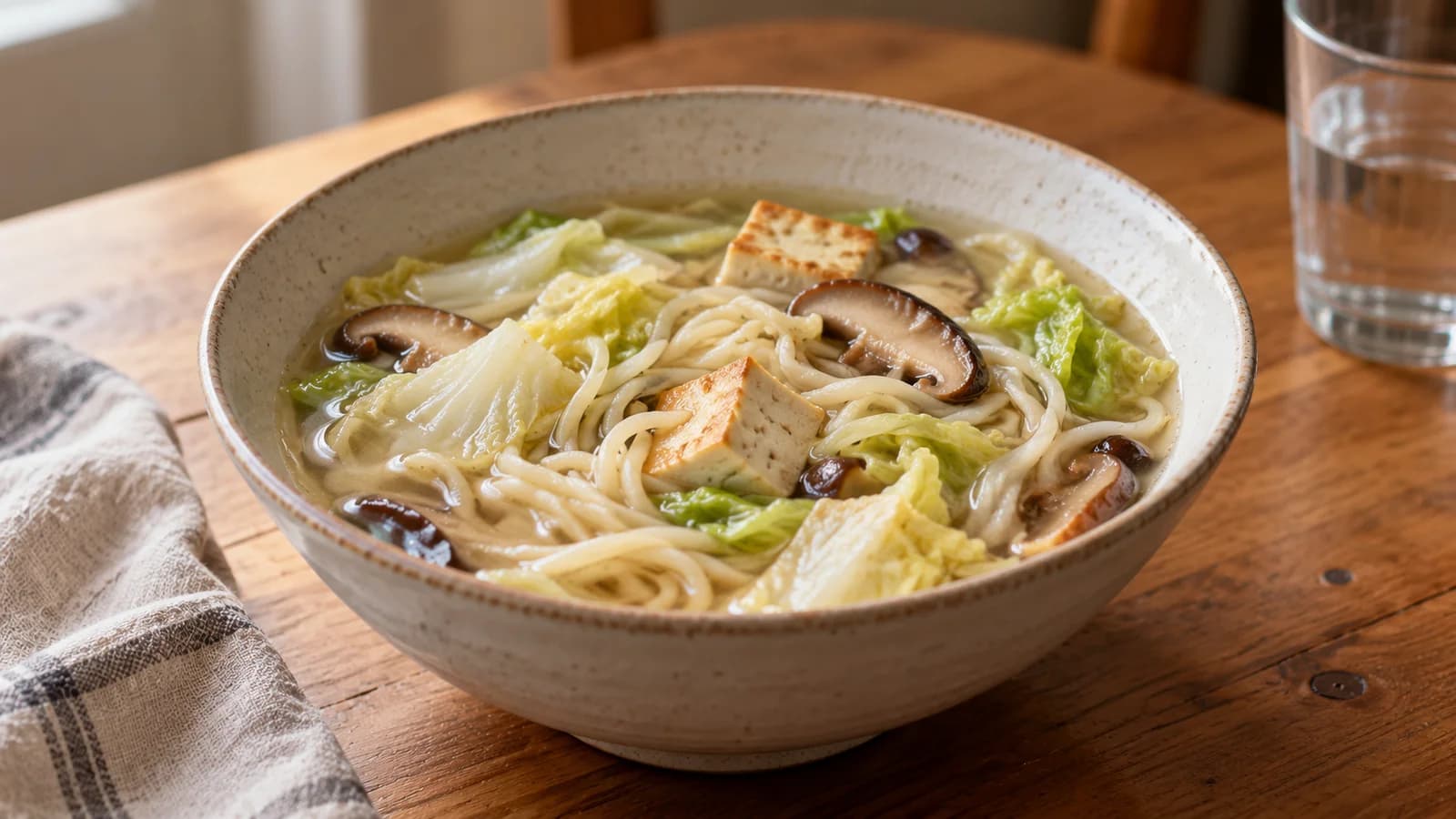
A noodle soup needs four things: a broth you can season, one or two vegetables, a topping that needs little work and noodles. The broth and toppings stay much the same from bowl to bowl. The noodles are what change the order of work. The worked bowl below runs through the whole sequence once, with udon.
One bowl for two
This bowl for two takes its amounts and order of work from Namiko Hirasawa Chen's vegetarian udon at Just One Cookbook. Prepared stock replaces her kombu and shiitake dashi, and her fried aubergine and minced mushrooms are left out.
| For two bowls | Amount |
|---|---|
| Prepared stock | 2½ cups (about 600 ml), made up as its label says |
| Ready-fried firm tofu (atsuage) | 3 oz (about 85 g), sliced thin |
| Shanghai bok choy, halved lengthwise | 2 |
| Udon | 12 oz (about 340 g); two packs in her recipe, so weigh yours |
| Mushrooms, sliced | 2 or 3 (an illustrative amount, not from her recipe) |
Metric figures take 1 US cup as 240 ml and 1 oz as 28.35 g, rounded. If your noodles are dry, use the weight per portion on their packet instead of her udon weight.
- Put the stock on to simmer and taste it. Check whether yours is already salty (the kombu soup packet in the tomato egg recipe below is); a plain stock needs seasoning, and her 2½ cups get 1 tablespoon of soy sauce, 1 tablespoon of mirin, 1 teaspoon of sugar and ¼ teaspoon of salt. Slice the mushrooms into it and let them soften.
- Slice the tofu thinly and add it to the stock. Turn the heat off and cover the pot to keep it hot.
- Bring a large pot of water to the boil. Halve the bok choy lengthwise and blanch it for 2 to 2½ minutes, until bright green and tender. If yours are bigger than the small Shanghai kind, go by the colour rather than the clock. Lift it out and keep the water on the boil.
- Cook the noodles in the same water, following their packet, and drain them well.
- Divide the noodles between two bowls, ladle the stock, tofu and mushrooms over them and lay the bok choy on top. Serve at once.
That is two pots: one for the stock, one for the bok choy and then the noodles.
What changes with the noodles
Only the noodle line changes.
| Noodles | What changes | Shown in |
|---|---|---|
| Wheat noodles, fresh or dried; udon you would normally boil | Cook in their own water to the packet, divide among bowls, ladle the stock over | The Woks of Life mushroom noodle soup, with fresh thin wheat noodles for four; the bowl above |
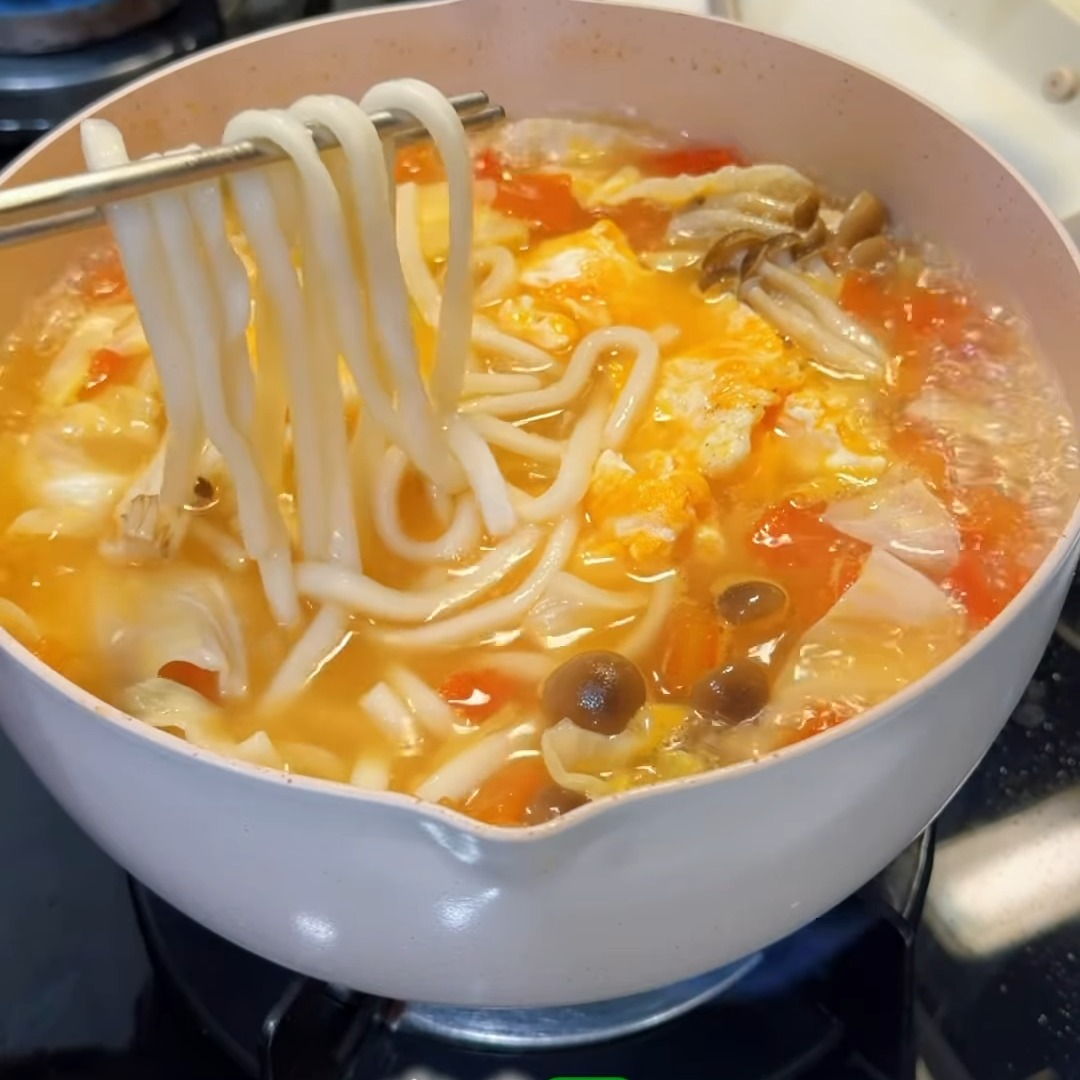
| Udon cooked in the soup itself | Stir into the simmering vegetables and warm until it loosens and is heated through; no separate pot | Tomato egg udon soup |
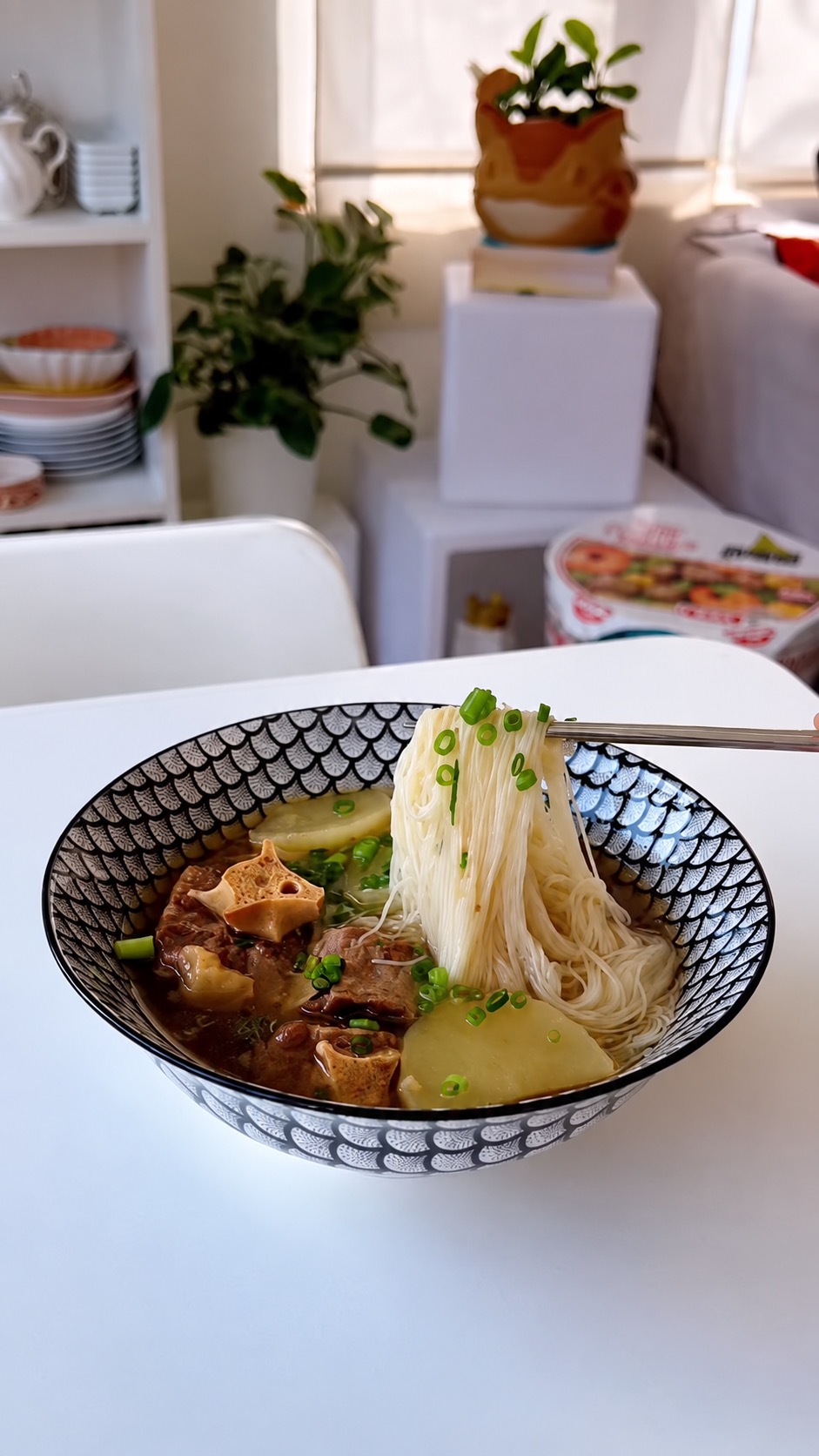
| Rice vermicelli | Prepare as the packet says, then pour hot broth over it | Oxtail and radish soup, whose notes pour leftover broth over vermicelli |
Where the broth comes from
Start with one you can season to taste: prepared stock made up as the label says, a soup packet, or a broth you made earlier. The tomato egg udon soup shows a route with no stock at all: it scrambles the egg first and sets it aside, cooks tomato to a pulp, adds mushrooms and cabbage, then water and a kombu soup packet, and returns the egg at the end. It uses only about half the usual water because the cabbage releases its own as it cooks. The soup packet is already salty, so the recipe seasons only lightly at the end.
The oxtail and radish soup is a broth made ahead: pre-boiled oxtail pressure-cooked for 40 minutes.
When something goes wrong
| What you notice | What to do |
|---|---|
| The broth is too salty | Check the dilution on the label first. If it is already made, add unsalted water or stock a little at a time and taste between additions. Next time, season only after tasting the finished broth |
| The bok choy is dull and soft | Bright green and tender is the stopping point, and her timing is 2 to 2½ minutes for halved bok choy. Lift it out sooner next time |
| The noodles are not done when everything else is | Keep the broth hot and covered; the noodles are the last thing into the bowl |
| You have a different topping | Cooked toppings, like the tofu here, go into the hot stock; raw leafy vegetables go through the noodle water like the bok choy |