How to stop avocado going brown (and store half)
Last updated October 8, 2026
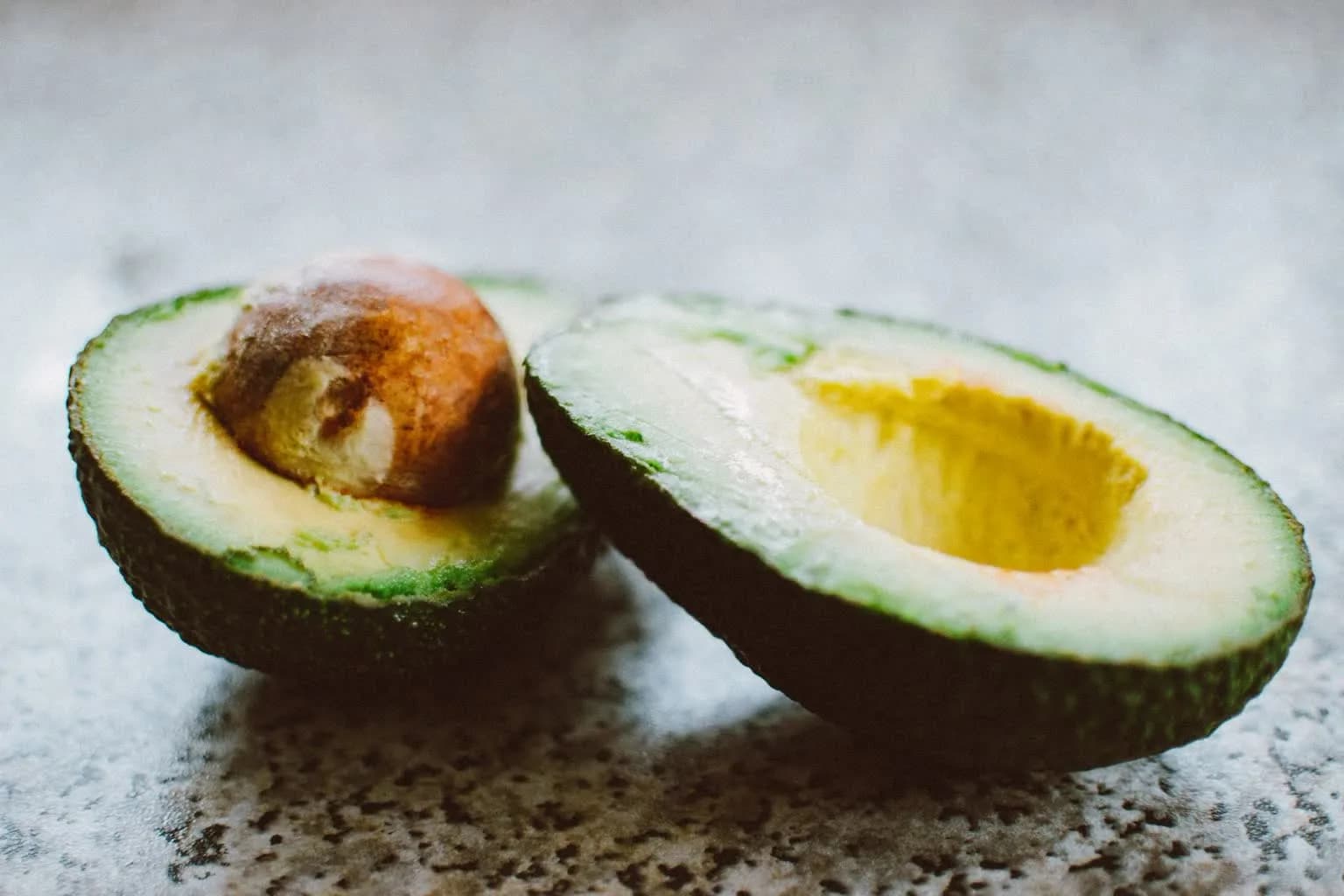
Cut avocado goes brown because an enzyme in the flesh, helped by oxygen, turns the avocado's natural compounds brown. Keeping air off the cut surface is the most direct way to slow that, and lemon juice or oil adds a little more.
Keep air off the cut surface
The enzyme is polyphenol oxidase. It needs oxygen to turn the avocado's phenolic compounds into the brown pigment, so with the oxygen cut off the reaction slows right down, even with no acid involved. Cold slows it too, which is why the fridge helps as well as the wrapping.
To store half an avocado:
- Wash the avocado under running water and scrub it with a clean produce brush, then dry it, before you cut it. The FDA's reason is that this stops dirt and bacteria being "transferred from the knife onto the fruit".
- Keep the half with the stone in. The stone covers a lot of the cells underneath it, as a University of California extension adviser told Live Science, though some browning may still show around its edge.
- If you have it, brush the cut face with a little lemon or lime juice, or olive oil. Cleveland Clinic gives no amount beyond "a little bit", so go light. The enzyme is sensitive to acid and works much more slowly in it. Live Science quotes a registered dietitian: "The citric acid in lemon and lime juice delays oxidation." Covering the flesh is what limits oxygen exposure, so the juice is a backup, not a substitute.
- Wrap it tightly in cling film, pressed against the flesh so there are no gaps where air can sit (Cleveland Clinic's test). An airtight container with as little air space as possible follows the same principle.
- Put it in the fridge and use it soon.
Sandwiches, lunch boxes and guacamole
For a sandwich made ahead, keep the cut face away from air inside the box, for example by pressing the avocado between bread, cheese or sliced tomato rather than leaving a face exposed. A little lemon juice or olive oil on the cut face helps too.
Guacamole browns faster than a cut half, because mashing exposes more of the avocado to oxygen. Press cling film onto the surface of the guacamole itself, not just across the top of the bowl, or use an airtight container. Live Science adds that a little extra lime in the guacamole could help.
How long a cut half keeps
Cleveland Clinic says the fridge keeps it fresh "for a day or so". Left for days, it can pick up a rancid taste, according to the extension adviser Live Science quotes. That advice is about freshness; none of these sources gives a food-safety limit for cut avocado.
If it has browned anyway, cut off the thin brown layer and eat the green part underneath. A registered dietitian quoted by Live Science puts it this way: "Only the exposed flesh will turn brown, and you can remove that thin layer and enjoy the green part underneath." That advice is about taste and appearance, not safety.
Freezing
Not as a half. The US National Center for Home Food Preservation (NCHFP) says avocados are best frozen as purée, unsweetened for salads and sandwiches, and "are not satisfactorily frozen whole or sliced". It peels, halves, stones and purées them. For better quality it adds 1 tablespoon of lemon juice for every 2 avocados, then packs the purée with headspace and freezes it. Cleveland Clinic mentions freezing as an option if the avocado is for a smoothie.
The NCHFP avocado page gives no storage time. Its general freezer guide gives 8 to 12 months at 0°F (-18°C) for fruit and vegetables, with the shorter end best for quality, and does not list avocado separately.
Why not water, and why wash first
Do not store a cut avocado in water. An FDA official told Good Morning America that the agency does not recommend it, because Listeria or Salmonella on the surface "may potentially multiply during the storage when submerged in water".
Washing matters because the skin is where the bacteria were found. The FDA's 2014–2016 sampling of whole fresh avocados (not cut halves at home) found Listeria monocytogenes on 17.73 per cent of skin samples and 0.24 per cent of pulp samples. The same report passes on foodsafety.gov's advice to wash produce under running water before cutting, even if you will peel it, and to scrub firm produce such as avocados with a clean produce brush, then dry it.
Sources
- Compound Interest: the chemistry of avocado browning
- FDA: Microbiological Surveillance Sampling, FY14–16 Whole Fresh Avocados
- Good Morning America: FDA warns against storing avocados in water
- Cleveland Clinic: How to store avocados
- National Center for Home Food Preservation: Freezing avocados
- National Center for Home Food Preservation: How long can I store frozen foods
- Live Science: why avocados turn brown so quickly