Why is my rice mushy or hard?
Last updated October 4, 2026
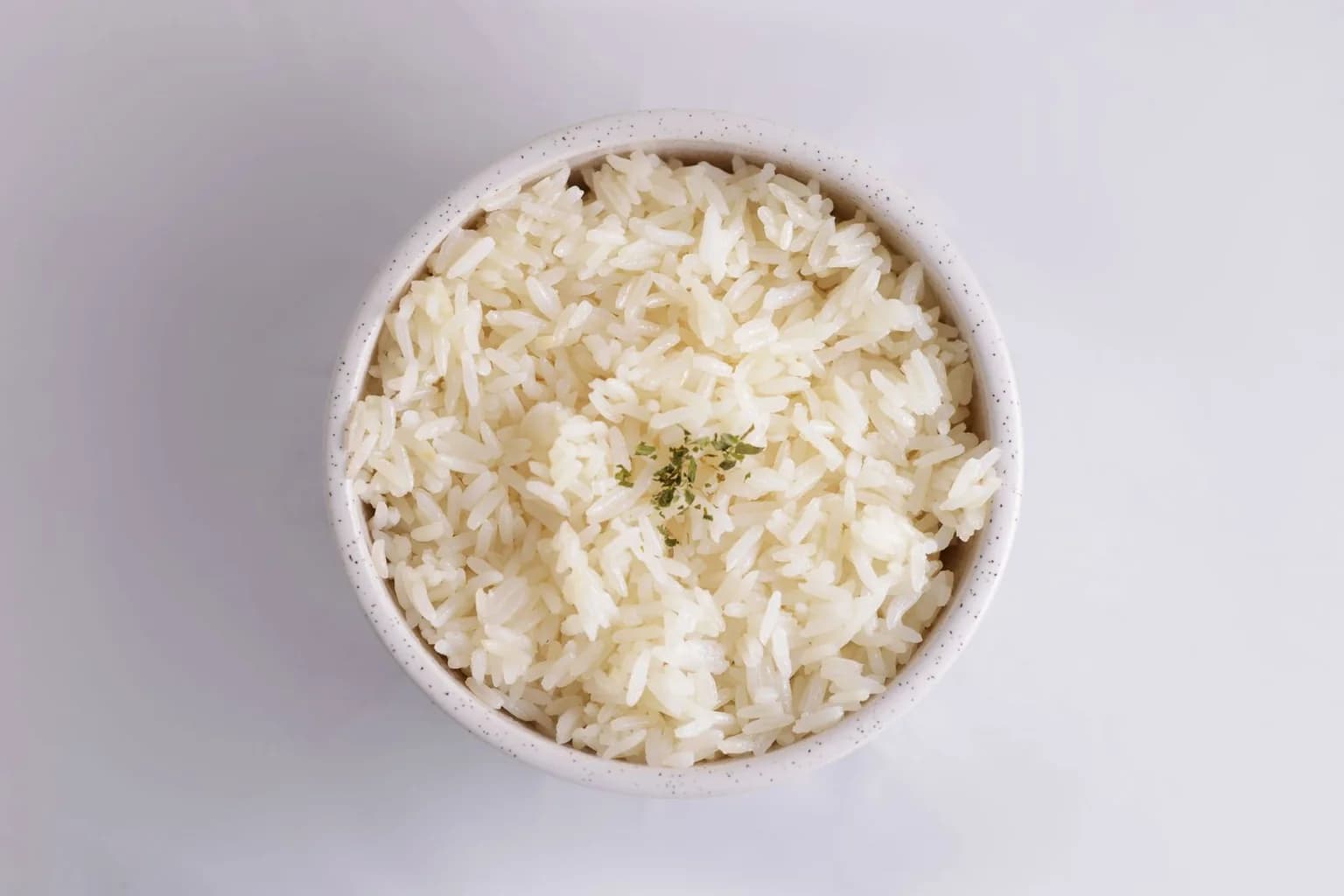
If your rice is mushy or gluey, it most likely had too much water or got stirred. If it is hard or crunchy in the middle, it most likely ran short of water, lost its steam when the lid came off, or skipped the rest. In both cases the question is how much water the grains took in and whether the steam stayed in the pot.
What does each rice problem usually mean?
Find the way yours went wrong in the first column. The causes come from RecipeTin Eats and America's Test Kitchen.
| What you see | Usual cause | What to change next time |
|---|---|---|
| Soft, swollen, gummy rice | Too much water | Measure the water rather than eyeballing it, and remember that rinsed rice carries some water in with it |
| Gluey, clumpy rice | Stirring while it cooks, or surface starch | Don't stir while it cooks. If it still clumps, rinse the rice once before cooking |
| Hard or crunchy in the middle | Not enough water | Add a little more water next time |
| Hard and unevenly cooked | The lid was lifted and the steam escaped | Leave the lid on until the rest is over |
RecipeTin Eats puts the stirring problem bluntly: stirring "activates starch" and gives gluey rice. It also says the rest is "when the rice finishes cooking in the residual heat".
Why does rice go mushy?
Too much water is the usual culprit. RecipeTin Eats gives a worked example: recipes that call for 2 cups of water and also rinse the rice "end up using almost 2 1/4 cups of water for 1 cup of rice", which it describes as overly soft rice with gummy surfaces.
Stickiness is a separate cause. America's Test Kitchen says rinsing raw grains removes surface starch that "will otherwise absorb water during cooking, causing grains to stick." Rinsing is not unanimous, though. USA Rice says U.S.-grown rice does not need washing, RecipeTin Eats treats it as optional, and Tilda's basmati instructions say to rinse until the water runs clear. If your rice sticks, check first that nothing stirred it, then try rinsing once and trim the water slightly.
Why is my rice still hard?
The grains have not had enough water or enough steam. RecipeTin Eats puts lifting the lid, skipping the rest and using too large a pot among the causes: lifting the lid lets the steam out, and an oversized pot lets the liquid evaporate before the grains are done.
USA Rice gives the same instruction in plain form: "Keep lid on pot during cooking to prevent steam from escaping" and "Do not stir."
Can you rescue a pot that has gone wrong?
Hard rice can usually be rescued. Mushy rice can't be firmed up, but it can become something else.
For crunchy or undertender rice, two sources say what to do:
- USA Rice: "If rice is not tender or liquid is not absorbed, cook 2 to 4 minutes longer." And: "If the rice is crunchy or has a hard center, add more liquid."
- RecipeTin Eats: add an extra 1/4 cup of water for every 1 cup of rice you started with, put the lid back on over low heat for 5 minutes, then rest it for 10.
Bite a grain to check: it should be tender through the middle, with no chalky core.
For mushy rice, the leftover rice guide suggests patties when the grains stick together, and the Hong Kong baked pork chop rice recipe says fresh rice can be swapped for leftover rice when frying. Whichever route you take, get rice you are saving into the fridge within an hour, and eat it within a day. Can you reheat rice? has the rest of the rules.
Do different kinds of rice need different water?
Yes, and the sources do not agree on a single number, so treat any ratio as a starting point. USA Rice's chart gives liquid to rice as 2:1 for long-grain white, 1½:1 for medium-grain, 1¼:1 for short-grain, and 2:1 for U.S.-grown jasmine and basmati, with 15 to 18 minutes for all of them. Tilda gives basmati as 2:1 by weight (240 ml water to 120 g rice) for 10 to 12 minutes on low, then 3 minutes standing, a shorter rest than the 10 minutes America's Test Kitchen and RecipeTin Eats give. RecipeTin Eats uses 1 cup of rice to 1½ cups of water for standard white rice on the stove.
Two Nourishible recipes, two approaches:
| Recipe | Rice | Method and quantities |
|---|---|---|
| One-pot halal cart chicken and rice | Basmati | 2 cups rice to 3 cups water, covered on low for about 18 to 20 minutes |
| Beef broth bowls with coconut curry | Basmati | Boiled in generously salted water for about 10 minutes until tender, drained |

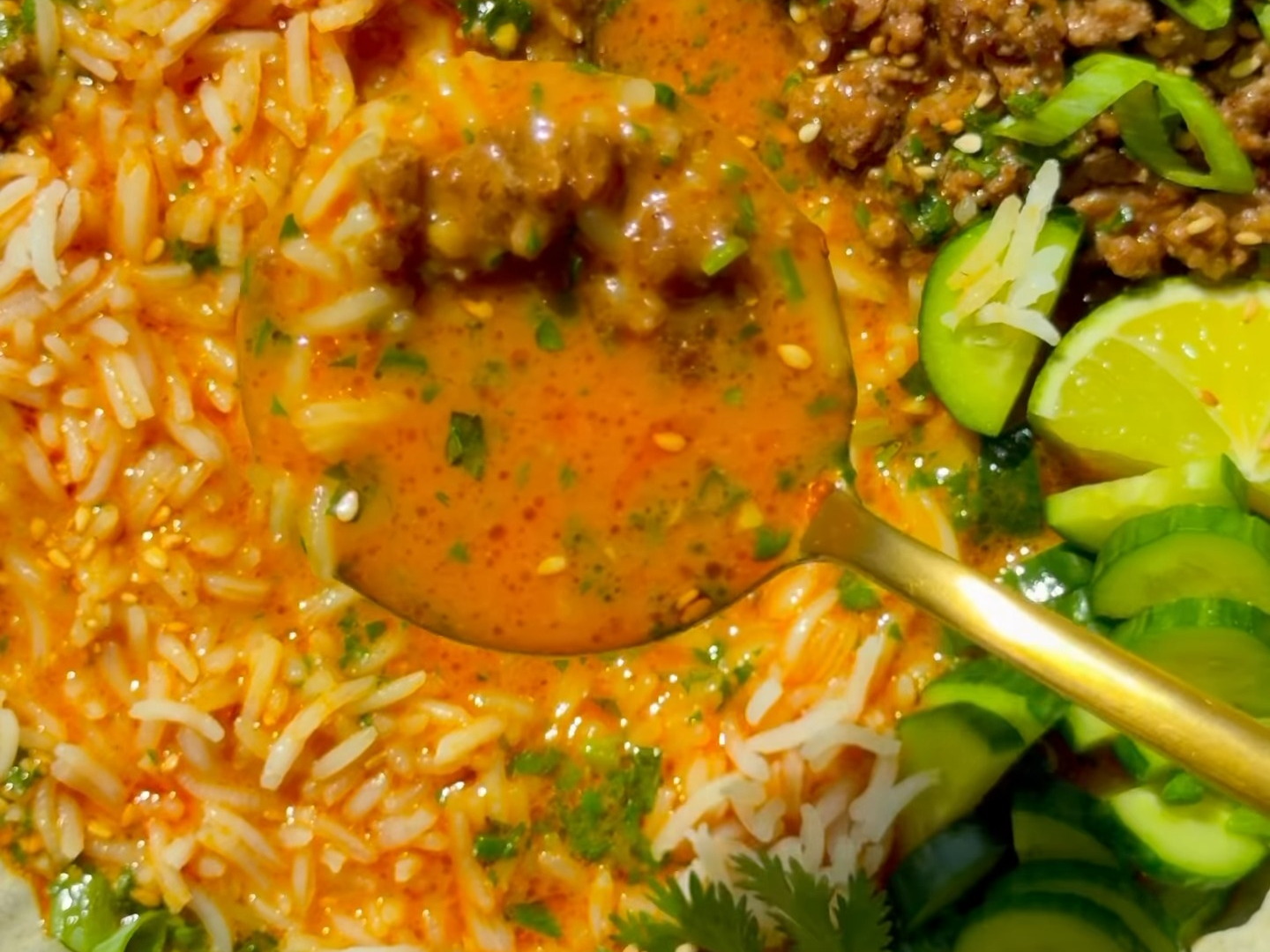
The halal cart ratio of 1:1.5 matches RecipeTin Eats and sits below USA Rice's 2:1. Start from your packet, and if the first batch comes out wrong, change the water by a small amount rather than a large one.
Is there a way to cook rice that is harder to get wrong?
Boiling rice like pasta means there is no ratio to measure, though you still need to check for tenderness at about 10 minutes. The beef broth bowls recipe does this: boil the rice until tender, drain it, return it to the dry pot, cover it and let it steam until you are ready to serve.
When the pot comes out right, Cantonese beef with silky scrambled eggs is served over steamed rice.