What to make with leftover rice
Last updated September 23, 2026
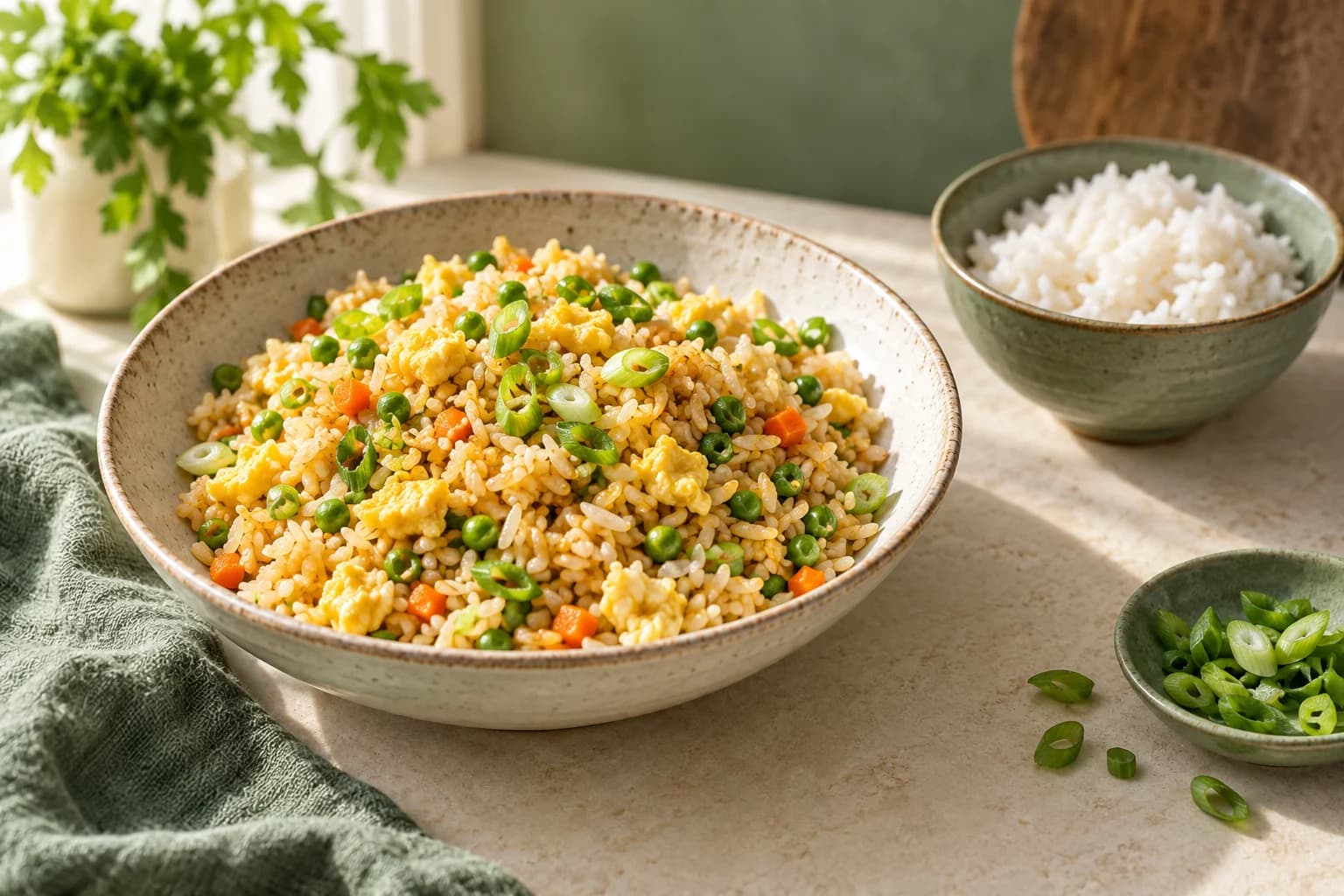
Leftover cooked rice can become fried rice, a cold dressed bowl, a quick soup or crisp rice patties. Pick by texture: dry, separate grains suit a hot pan; soft or clumped rice is better with broth or a binder. These ideas start with rice that has already been cooked and promptly chilled, so you can get to dinner without cooking another pot.
Is your leftover rice ready to use?
Use rice that went into the fridge within one hour of cooking and will be eaten within 24 hours. The Food Standards Agency's rice guidance says to reheat it only once, until steaming hot throughout. The NHS guidance on cooked rice also says to throw away rice left at room temperature overnight. If the rice sat out for hours, a vigorous stir-fry does not fix that.
The ideas below are ways to use the rice, not extra time in the fridge. Take out the portion you need and keep the rest chilled while you cook. For the reason behind the rule, read can you reheat rice?.
Which leftover rice meal fits the rice you have?
Choose fried rice for loose grains, a cold bowl when you want to leave the hob off, soup for a small or rather dry portion, and patties when the grains stick together. The flavourings can change, but the job each dish gives the rice is different.
| What you have | Make | Why it works |
|---|---|---|
| Separate, fairly dry grains | Fried rice | The rice can be tossed through a hot pan and coated with seasoning. |
| Cold rice and crisp vegetables | Dressed rice bowl | A sharp dressing and crunchy toppings carry the meal without reheating the rice. |
| A small portion, or rice that feels dry | Quick rice soup | Broth gives the grains a new texture and stretches a modest amount. |
| Clumped, short-grain rice | Crisp rice patties | The grains already hold together, so they are easier to shape. |
How do you turn it into fried rice?
Cook the other ingredients first, then add the chilled rice and heat it until steaming throughout. Start with a little oil in a wide pan. Soften chopped onion or spring onion, cook any raw vegetables or protein fully, then break up the rice with a spatula. Leave it against the pan for a moment before tossing; that gives some grains a little colour instead of steaming the whole batch.
Keep wet sauces modest. A spoonful of soy sauce or a mix of soy and vinegar is easier to distribute than a large pour, which can make the rice soggy. If you want egg, push the rice aside, cook the egg in the cleared space, then fold it through. Finish with something fresh such as spring onion or cucumber. The rice ingredient page is a useful starting point if you are choosing a type of rice for a future batch, but today's meal starts with what is already in the fridge.
For a full dinner built around cooked rice, try Hong Kong baked pork chop rice. Its method explicitly allows leftover rice: fry it with egg, add the pork chops and sauce, then bake the assembled dish. Bake it without cooling or storing the rice between steps, then check that the rice is steaming hot throughout before serving.
What if you do not want to use the hob?
Make a cold rice bowl with a dressing that has enough acidity to wake up the chilled grains. Loosen the rice with a fork, then toss it with rice vinegar or lemon juice, a little oil and seasoning. Add cucumber, grated carrot, herbs or pickled vegetables for crunch. Tinned fish, chickpeas or already cooked chicken can make it more substantial. Keep those additions chilled until you assemble the bowl, and eat it within the rice's 24-hour window.
For another way to build a meal from cold rice, see the leftover chicken rice bowl.
A cold bowl is most convincing when the toppings do different jobs. Choose one crisp thing and one sharp thing, then add a protein if you need dinner rather than a side dish. The same idea works with whatever is left after a roast or a tray of vegetables; you are arranging a meal around the rice, not trying to revive plain rice with sauce alone.
Can you put leftover rice into soup?
Yes. Add a small portion of chilled rice to simmering broth and heat it until the rice is steaming throughout. This is useful when you have too little rice for a bowl on its own. Ginger, greens and shredded cooked chicken give it a different shape from yesterday's dinner; mushrooms and a little miso are another route. Add quick-cooking greens near the end so they keep some texture.
Expect this to be a rice soup rather than a traditional long-cooked congee. Cooked rice softens quickly and thickens the broth as you stir. Add more liquid if it becomes thicker than you want, and serve it straight away. Do not cool and reheat the rice soup again.
If you would rather keep the rice as a side, Cantonese beef with silky scrambled eggs is served over rice. Reheat your chilled rice once, until steaming throughout, while the beef and eggs cook; the recipe itself does not call for leftover rice.
What can you do with rice that has clumped together?
Shape sticky rice into small patties and pan-fry until both sides are browned and the centres are steaming hot. If the grains will not hold, mix in beaten egg and a little flour, then cook a small test patty before shaping the rest. Chopped spring onion, herbs or grated vegetables can go into the mixture, but drain very wet vegetables first so the patties keep their shape.
Serve with a sharp dip or a crunchy salad. This is a good use for short-grain rice that comes out of the fridge in firm clumps; long-grain rice may need more binder. As with the other hot options, cook only the amount you intend to eat now, because the rice should be reheated once.