How to build a rice bowl that fits your portions
Last updated October 5, 2026
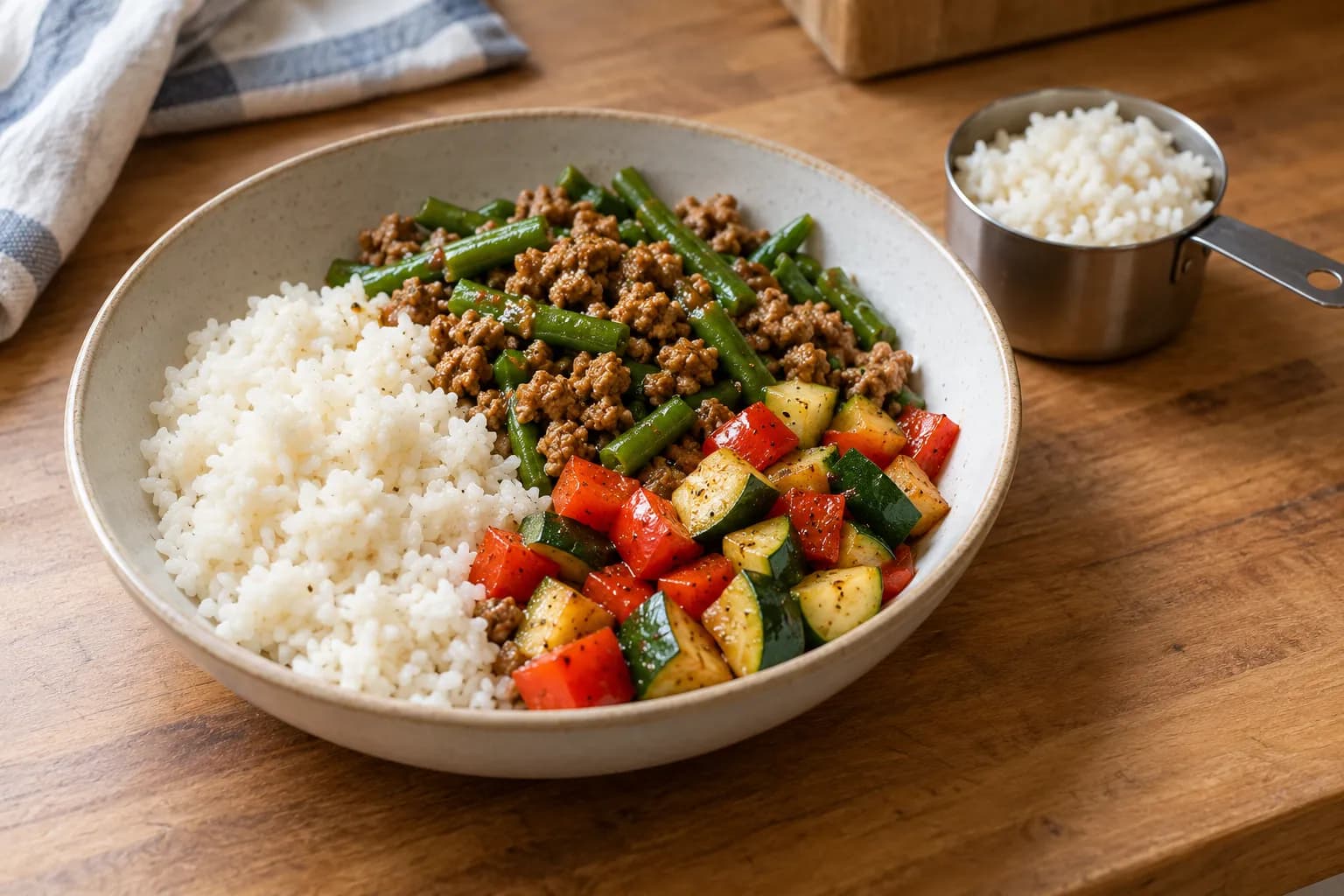
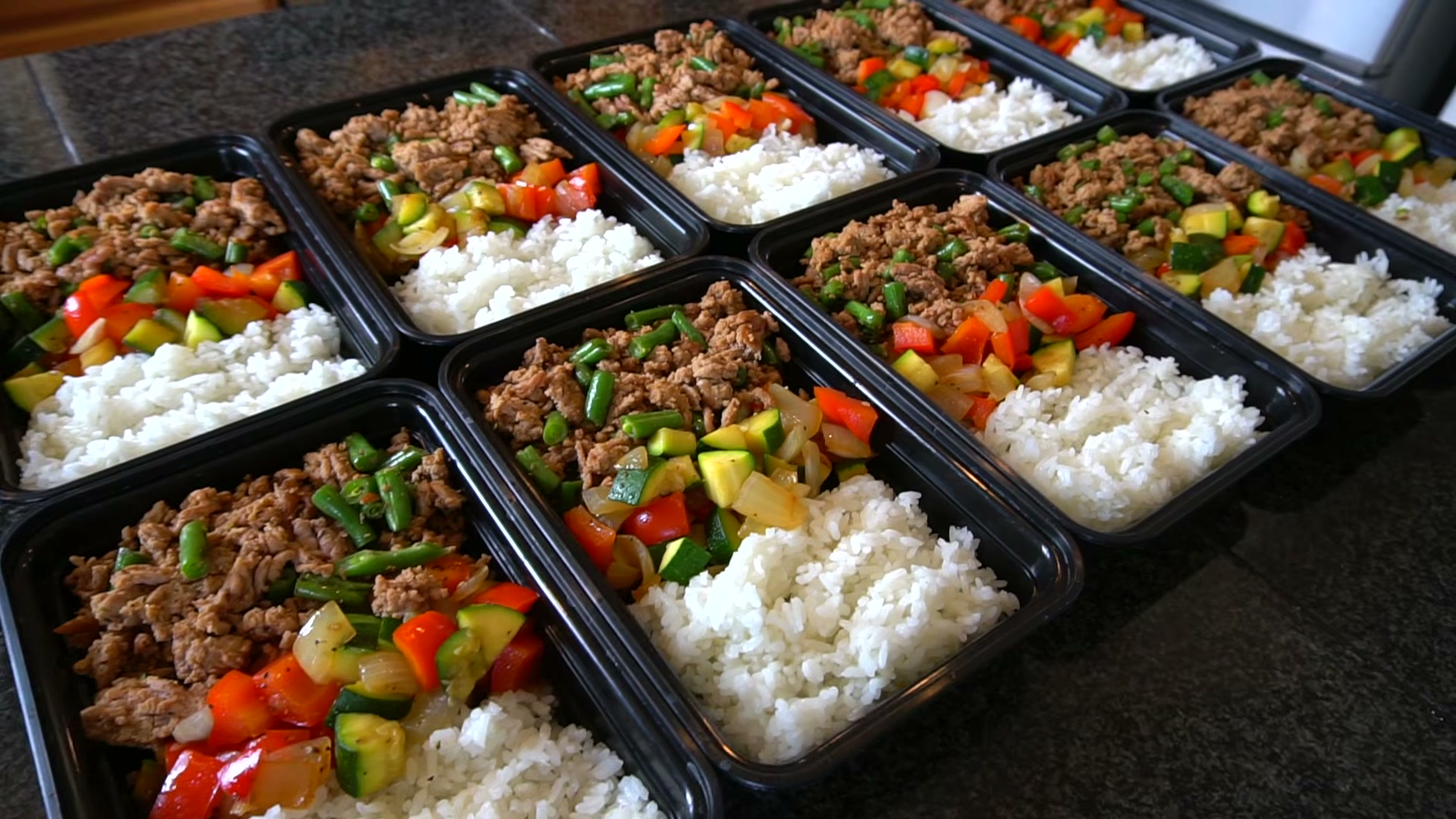
For a week of lunch boxes, weigh the cooked rice and divide everything else by the number of boxes. A scoop is easy to eyeball and hard to repeat, so the weight is what keeps box five the same as box one. Two of the three recipes below state a cooked rice weight, and together they show how differently a "rice bowl" can be split.
Start with the cooked rice
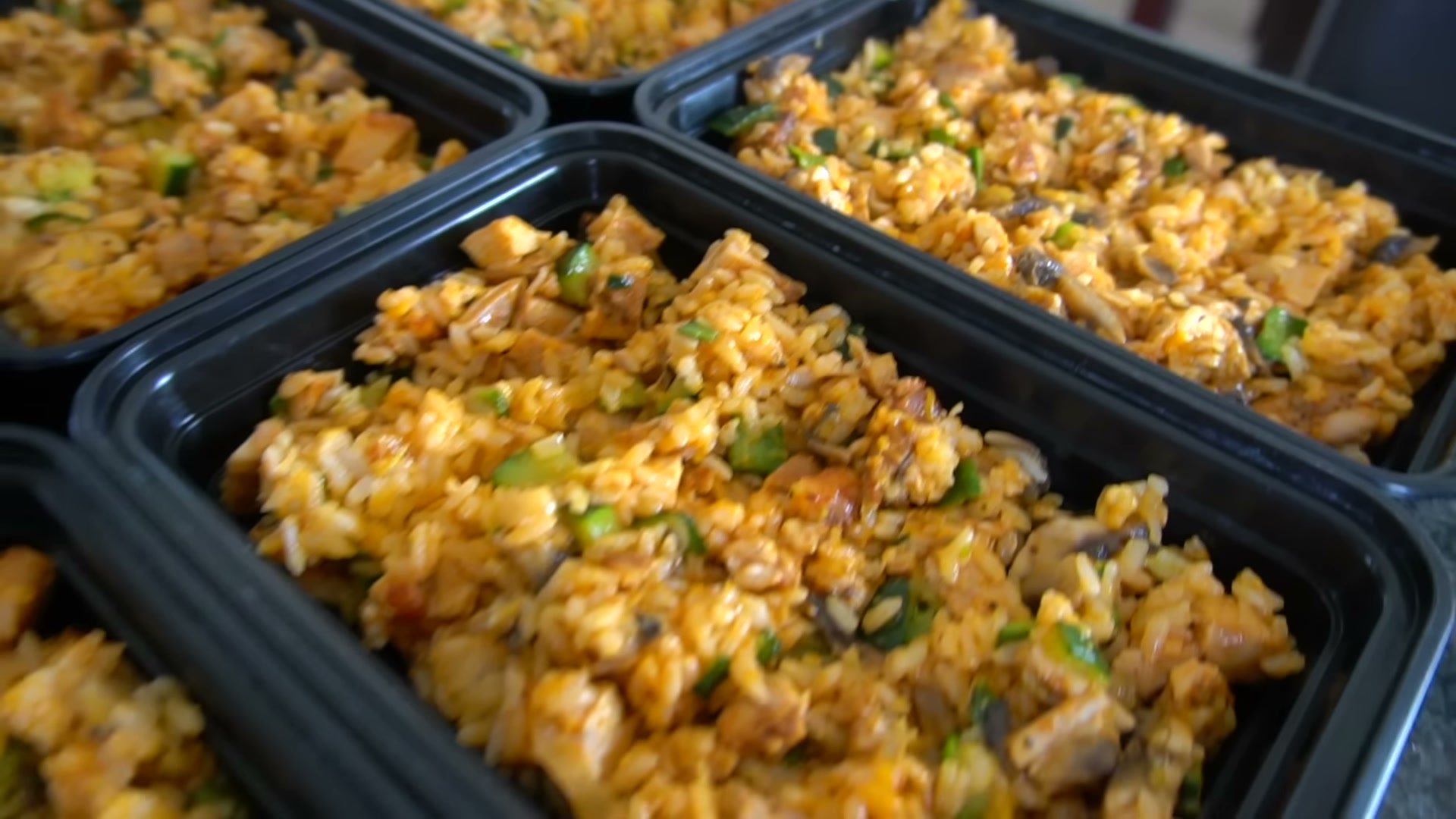
Weigh the cooked rice and divide by the number of boxes. The Honey Garlic Turkey Bowls recipe gives 563 g of cooked rice for 5 portions, which is 113 g each, or ¾ cup. The Buffalo Chicken Rice Bowls recipe gives 900 g for 10 portions, so 90 g each. Both work out at about 150 g of cooked rice per cup (563 g in 3¾ cups, and 900 g in 6 cups), which helps if you only have measuring cups.
A worked example for your own batch, with made-up numbers: six boxes at 113 g each need 6 × 113 = 678 g of cooked rice, which is about 4½ cups at the roughly 150 g a cup those two recipes work out to. Cook your usual pot once, weigh what comes out, and note the dry amount that produced it. That figure is more reliable than any conversion, because the recipes disagree.
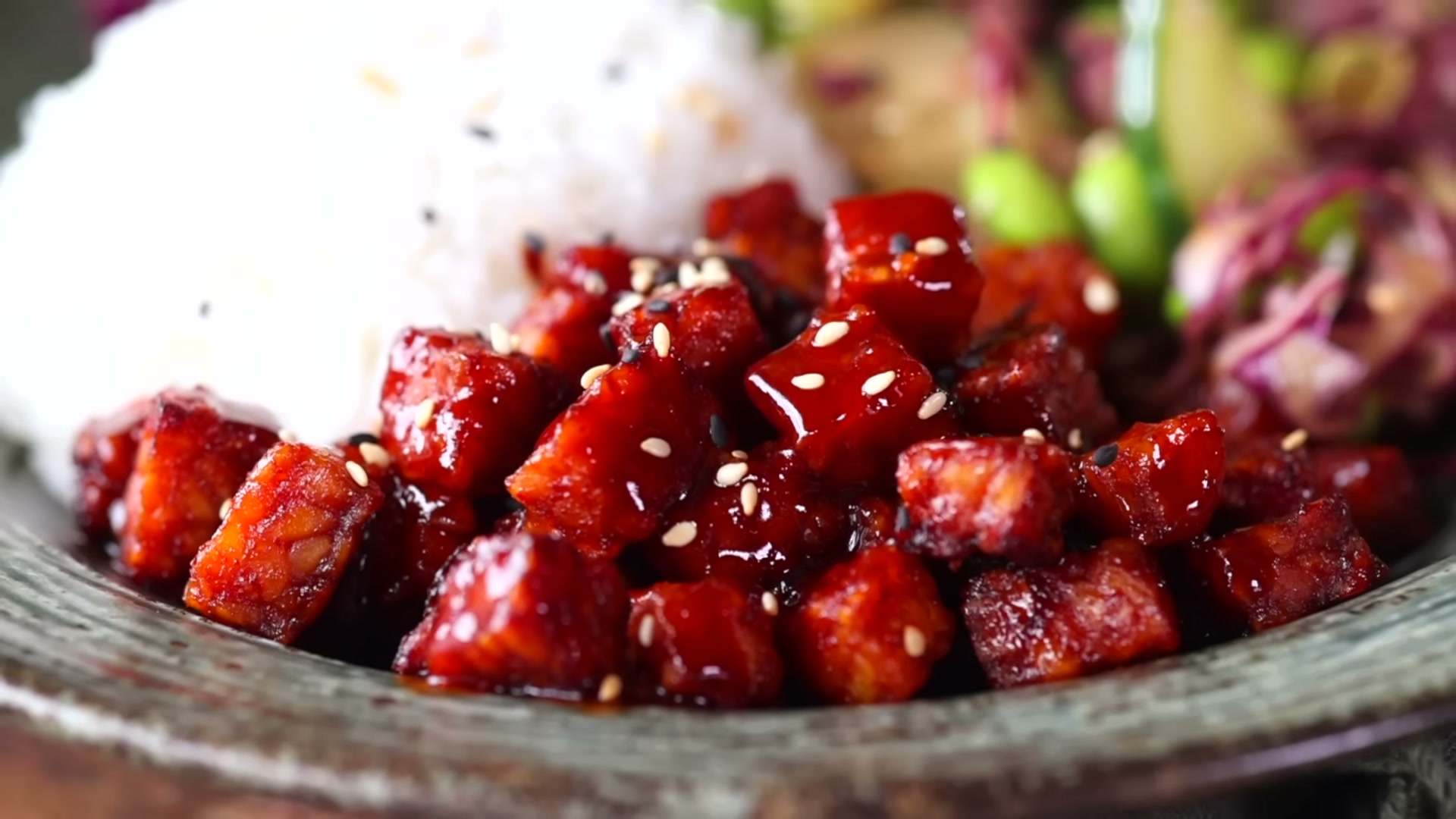
The turkey recipe says 3¾ cups cooked is about 1¼ cups uncooked, a ratio of 3 to 1 by volume. The buffalo recipe says 6 cups cooked is "about 2–3 cups uncooked, depending on the rice". The tempeh bowl lists 1⅓ cups of dry long-grain white rice for four portions and does not say what that makes cooked.
A cup is a coarse tool. At 150 g a cup, a ¾ cup (about 113 g) and a full cup differ by about 37 g of rice. USDA FoodData Central lists cooked long-grain white rice (enriched) at 130 kcal per 100 g, which puts 113 g at roughly 147 kcal and 150 g at roughly 195 kcal. Your rice may be a different type and cook wetter or drier, so treat those as an illustration of how much a scoop can vary.
If you are batch-cooking, how long the rice sits before it goes into the fridge matters as much as its weight. The storage and reheating rules are in can you reheat rice.
How three published bowls divide the space
The table shows per-portion amounts worked out from each recipe's stated quantities, with the whole recipe divided by its portions. Meat and vegetables are raw weights as listed, rice is cooked, and the tempeh bowl states its rice dry.
| Turkey bowl (5 portions) | Chicken bowl (10 portions) | Tempeh bowl (4 portions) | |
|---|---|---|---|
| Rice | 113 g cooked | 90 g cooked | ⅓ cup dry, cooked amount not stated |
| Protein | 136 g raw ground turkey | 182 g raw chicken thighs | 100 g tempeh |
| Vegetables | about 134 g raw (onion, red pepper, courgette, green beans) | about 145 g raw (courgette, mushrooms, onion) | ⅜ cup edamame, just under a fifth of a cucumber, ¼ cup shredded red cabbage |
| Fat added | about 6 ml olive oil (2 tbsp across 5) | about 6 g olive oil, plus 11 g cheddar | about 9.5 ml vegetable oil and 5 ml sesame oil, plus sesame paste in the dressing |
| Sauce | honey, sriracha, stock and soy, about 4 g honey per bowl | 12 g buffalo sauce | gochujang, soy, brown sugar and rice vinegar, shared between the bake and the drizzle |
Courgette appears as zucchini in the recipes, and the tempeh quantities are in cups because that is how that recipe is written.
The chicken bowl has less rice than the turkey bowl (90 g against 113 g) and more meat (182 g raw against 136 g). The tempeh bowl has the smallest main protein at 100 g, though its salad also contains edamame, which this comparison leaves out. In the tempeh bowl the vegetables arrive as a separate dressed salad beside the rice, while in the other two they are stirred into the box.
Count the oil and sauce
Sauce and oil are small by weight and easy to leave out, and they are the easiest things to adjust without changing how much food is in the box. The NHS says all oils and spreads are high in calories, so it is best to have them in small amounts. Take the oil in the whole recipe and divide it by the number of boxes. The buffalo recipe lists 60 g of olive oil for 10 portions, plus 112 g of cheddar, and its notes say buffalo sauces vary a lot in calories, so read the label if you swap brands. The turkey bowl uses 2 tablespoons of oil across 5 portions. The tempeh bowl uses 2½ tablespoons of vegetable oil for four, with sesame oil in the sauce and dressing and sesame paste in the dressing.
Decide how much of the box is vegetables
The NHS suggests 2 or more portions of veg in your main meal, which it describes as filling about half your plate. A lunch box has no plate to judge by, so use weight. The turkey and chicken recipes put 134 g and 145 g of raw vegetables in each box, and the finished box will look smaller because those are raw weights.
To add more, keep the extra as a separate item. The tempeh bowl's edamame, cucumber and cabbage salad sits beside the rice, so you can see how much there is and change it without touching the rest of the box.
Check a bowl against your goal
The NHS advice on eating when trying to lose weight says there is no single perfect way to lose weight, and covers portions, starchy food, vegetables, protein and fats. It suggests keeping starchy food such as rice to no more than a third of what you eat each day, and choosing wholegrain versions when you can. The NHS balanced-diet page gives just over a third. Call it about a third of the day's food: a share of the whole day, not of one box.
For a bowl, weigh the cooked rice, divide the protein, vegetables, oil and sauce by the number of boxes, then see where each bowl sits. How big is the rice share compared with the rest of the box? Is there some protein (the NHS suggests including some in each meal, such as beans, pulses, fish, eggs or lean meat)? How much veg, and how much oil?
The creators publish calorie estimates for their original recipes: Pick Up Limes gives 752 kcal per serving (one of four) for the tempeh bowl, and Josh Cortis gives 468 kcal for the turkey bowl and 448 kcal for the chicken bowl in the video descriptions. Change the rice, the oil or the sauce and those numbers stop describing your bowl.
If you are managing weight for a medical reason, a GP or registered dietitian can set a target that fits you. For what the numbers on a label mean, see understanding macros; for rice left over from batch cooking, see what to make with leftover rice.