Is rice bad for weight loss?
Last updated October 7, 2026
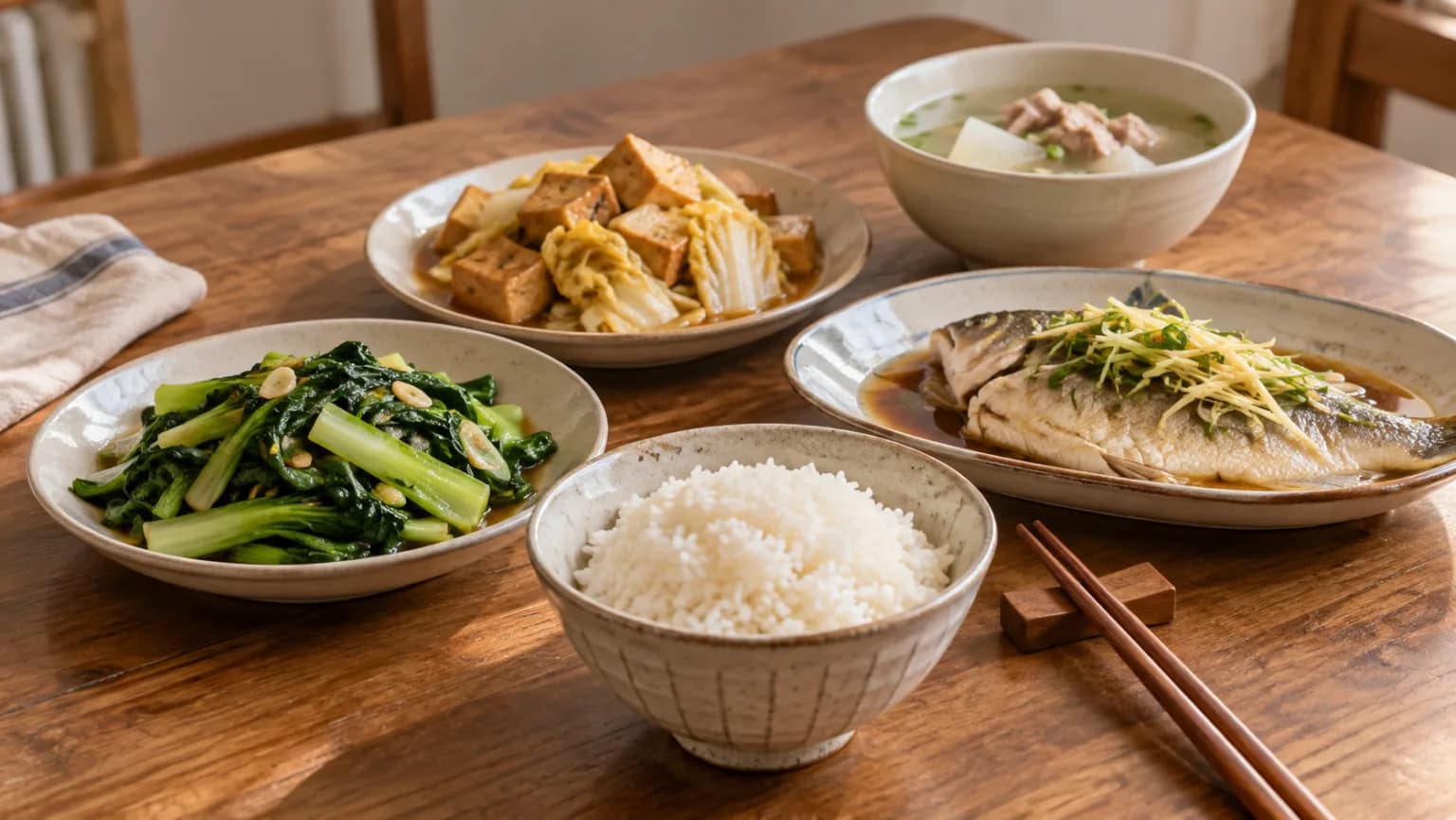
Rice is not a special case for weight loss. The NHS counts it as a starchy food, alongside bread, pasta and potatoes, and its advice for losing weight is about total calories and portions. In your own kitchen, the things that move the total are how much rice you serve, what fills the rest of the plate and how much oil goes into the pan.
Is rice fattening?
The NHS does not single rice out as fattening; it lists it with bread, pasta and potatoes. It says there is no single perfect way to lose weight, and that what matters most is finding a way of eating that helps you reduce calories and suits your everyday life. Rice contributes calories to that total, as any food does.
USDA FoodData Central lists cooked long-grain white rice (enriched) at 130 kcal per 100 g, with 28.17 g of carbohydrate and 0.28 g of fat. The NHS says that, gram for gram, starchy foods contain fewer than half the calories of fat. The portion, and whatever is cooked into or poured over the rice, still set the total.
Do regional obesity figures say anything about rice?
Not much. The WHO says worldwide adult obesity has more than doubled since 1990. In 2022 the prevalence of overweight ranged from 31% in the WHO South-East Asia Region (and the African Region) to 67% in the Region of the Americas. The figures are regional and say nothing about rice, so they cannot show that a rice-eating diet is slimming or fattening. The WHO's South-East Asia office describes a low prevalence there but an "alarming trend" in the rate of increase over the last 10 to 15 years.
Does the same BMI mean the same risk?
Not for everyone. The NHS says that for adults from South Asian, Chinese, other Asian, Middle Eastern, Black African or African-Caribbean backgrounds, a BMI of 23 to 27.4 is overweight and 27.5 or higher is obese, because these groups are at risk of health problems with a slightly lower BMI. For most adults the ranges are 25 to 29.9 and 30 or more.
Someone can look slim and still fall in a range the NHS classes as overweight for their background. If that might be you, a GP can tell you where you sit.
Is there a link between white rice and type 2 diabetes?
There is a reported association. A 2012 BMJ meta-analysis (Hu et al.) pooled prospective cohort studies and concluded that higher consumption of white rice is associated with a significantly increased risk of type 2 diabetes, especially in Asian (Chinese and Japanese) populations. Comparing the highest with the lowest category of intake, the pooled relative risk was 1.55 in Asian populations and 1.12 in Western populations, where the result was not statistically significant (95% confidence interval 0.94 to 1.33). Each extra daily serving was linked to a relative risk of 1.11 (95% confidence interval 1.08 to 1.14).
The Asian populations in those studies ate three to four servings a day, against one to two a week in the Western ones. These are cohort studies, so they describe an association between how much white rice people ate and who developed diabetes, not what one bowl does. If you have diabetes or are at higher risk, your GP, practice nurse or a registered dietitian can advise on rice and portion size for you.
What do you control when you cook rice?
Five things are in your hands. To weigh a portion into lunch boxes, use how to build a rice bowl that fits your portions.
| Lever | What you can change | Where it comes from |
|---|---|---|
| Amount of cooked rice | 100 g of cooked white rice is about 130 kcal, so 150 g is about 195 kcal and 200 g about 260 kcal. Weigh it rather than scoop. | USDA FDC 168878, multiplied through. Your rice may cook wetter or drier. |
| Wholegrain or white | The NHS says to choose wholegrain varieties where you can. | NHS starchy foods page |
| What fills the rest of the plate | The NHS says to fill about half your plate with veg, and to keep starchy food like rice to no more than a third of what you eat each day (the NHS's general advice says just over a third). | NHS weight loss page; NHS starchy foods page |
| Oil | The NHS says all oils and spreads are high in calories, so have them in small amounts. The recipes below give oil as "as needed" or "a little", so measure your own. | NHS weight loss page; recipe ingredient lists |
| Sauce | The recipes below list soy sauce "to taste" with no weight, so the amount is yours to set. | Recipe ingredient lists |
What does a rice meal with several dishes look like?
Cooking two or three dishes to eat with the rice means the rice is only part of the meal. The Napa Cabbage and Pan-Fried Tofu Claypot gives you a vegetable and tofu dish. The Steamed Egg Custard with Minced Pork Sauce is a gentle protein dish with a small meat sauce. The Cantonese Beef with Silky Scrambled Eggs is tagged "serve with rice" and lists steamed rice as an optional serving.
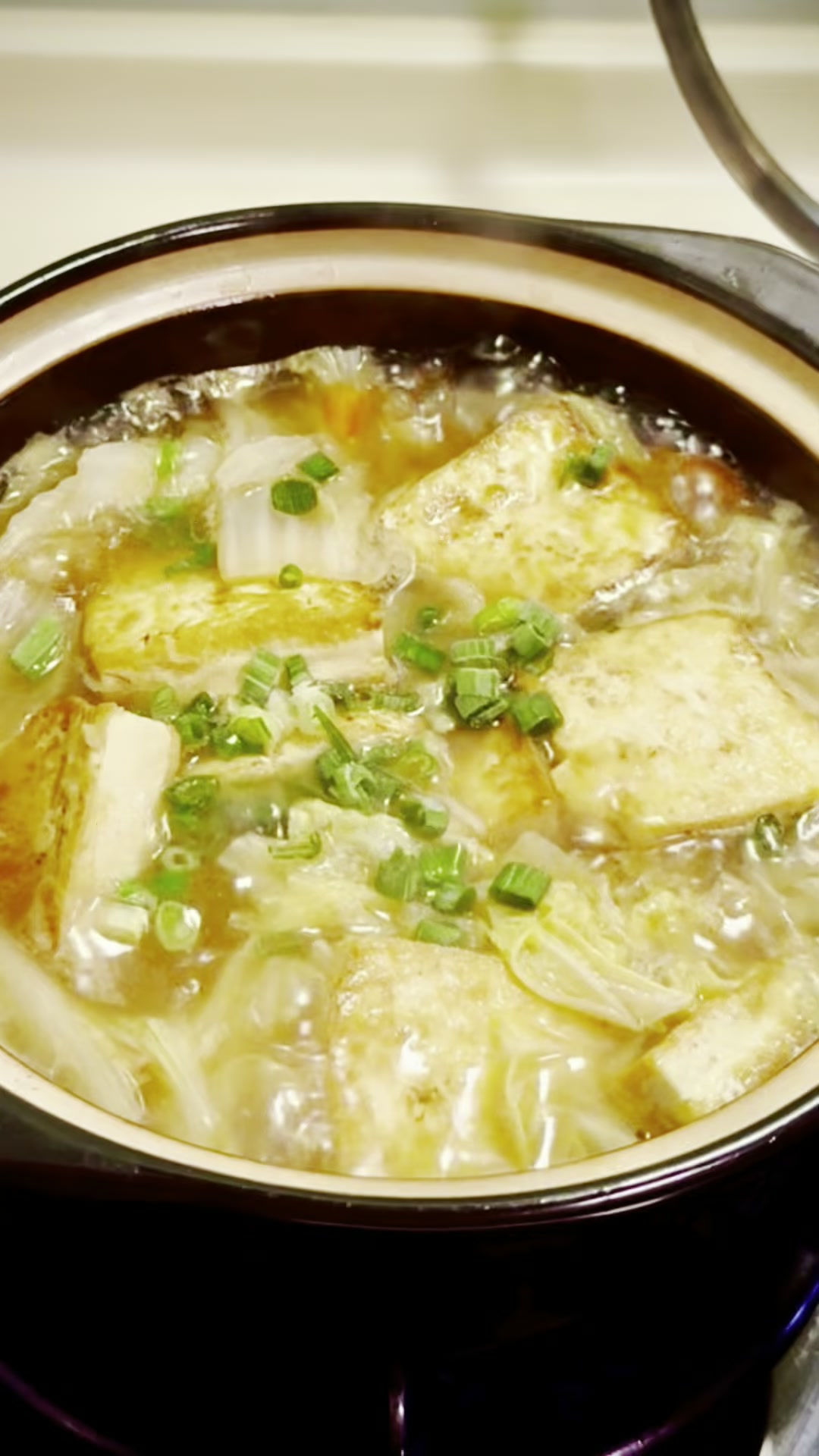
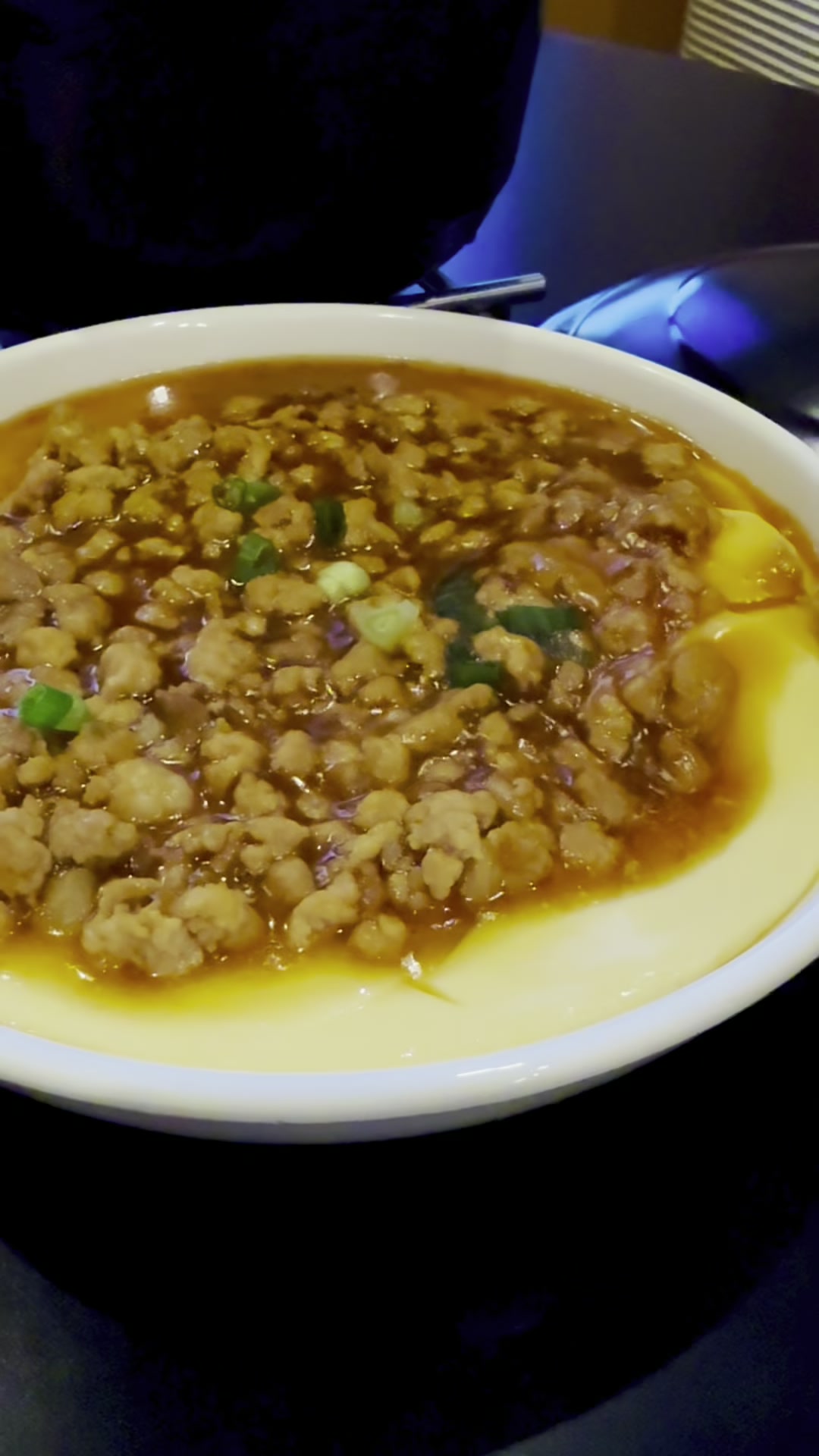

Each is a dish to eat beside rice rather than a rice dish: one built on vegetables and tofu, one on egg and pork, one on beef. None of the three states per-portion quantities, so there are no calorie figures for them here. For what the numbers on a label mean, see understanding macros.
Setting a target
A GP or registered dietitian can set a calorie target that fits your age, activity and health. The NHS page on healthy eating when trying to lose weight covers portions, starchy food, vegetables, protein and fats.