5 dinners for a week too hot to use the oven
Last updated October 3, 2026
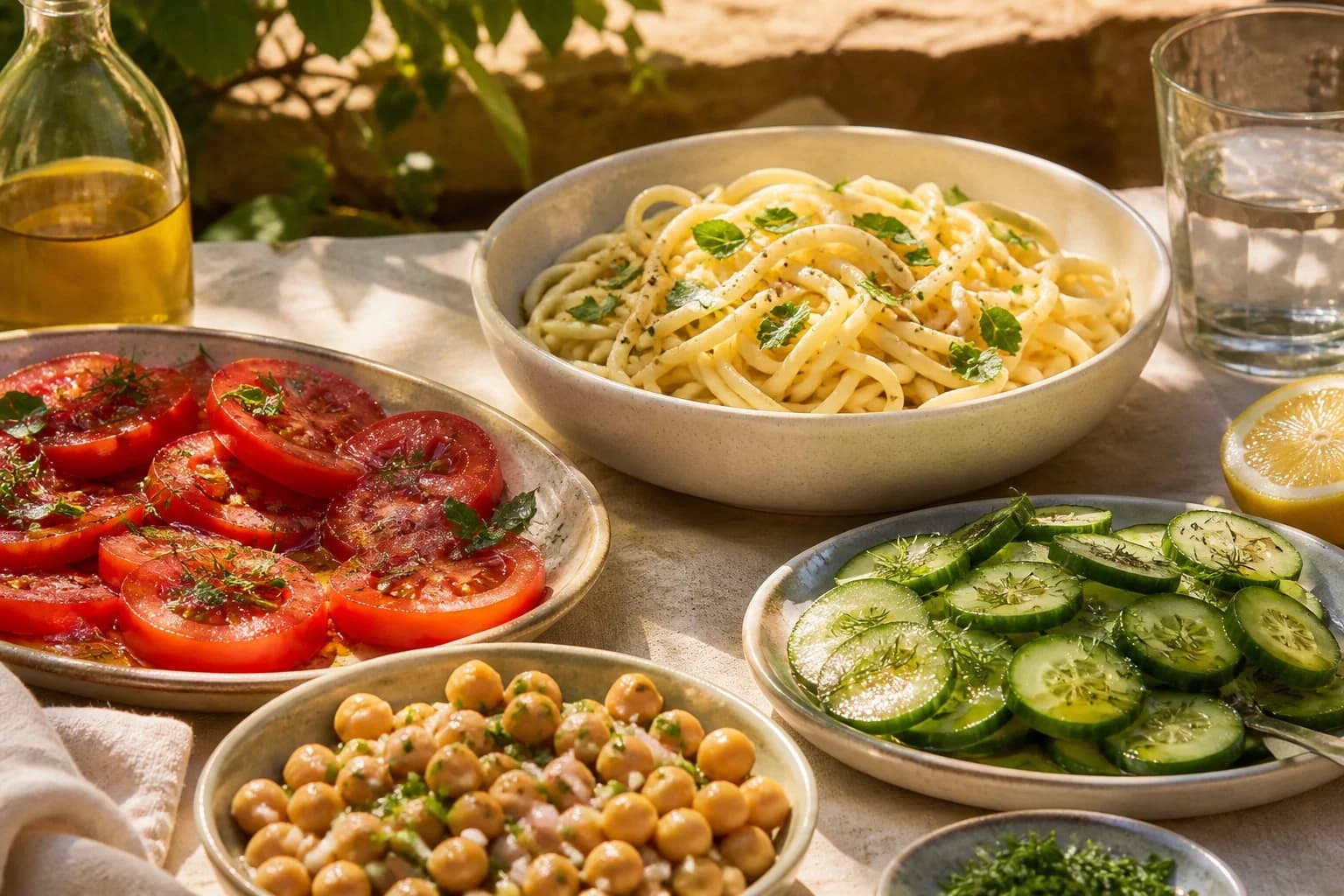
When the kitchen is already warm, dinner should need a short burst of heat and very little standing over it. These five keep the oven off, and no recipe with a listed time runs past 35 minutes. The sausage stew has the least timed cooking, the tomato and egg dish uses the gentlest heat, the courgette salad is eaten at room temperature, and the spaghetti and the clam broth are the ones that make you put up with a pot of boiling water.
1. Lemon sardine spaghetti
Canned sardines need no cooking, so the sauce takes minutes in one frying pan: spinach wilted for 30 seconds and set aside, then shallot, garlic, capers, lemon zest and the sardines, with white wine and lemon juice reduced by half and butter stirred in on the lowest heat. The spaghetti boils in a separate pot until just under al dente and goes through the sauce with some of its cooking water, with the spinach and olive-oil toasted breadcrumbs added at the end. The recipe serves 2 and lists about 25 minutes, and the pot of water is the hottest, longest job.
2. Loofah and clams in a light broth
A light broth is easier to face in hot weather than a thick sauce. This Cantonese-style dish steams 600 g of clams for about 4 minutes, stir-fries loofah with garlic, shallot and ginger, then adds 300 ml of stock and the clams for a rolling boil of just a minute or two. The recipe lists 35 minutes and serves 4, which makes it the longest of the five, and it lists no rice or noodles, so cook a starch alongside if you want a full dinner (an editor's suggestion).
The creator says another melon or gourd will do if you do not like loofah, and shrimp can replace the clams. After steaming, throw away any clam that has not opened or has visible dark grit, as the recipe instructs.
3. Spicy sausage and chickpea stew
One frying pan holds red onion, garlic and chilli for a minute, spicy pork sausage for two, then canned tomatoes and chickpeas simmering under a lid for four minutes before the spinach goes in. The recipe's timed steps come to about seven minutes at the hob; its 20 minutes and four servings are estimates. It is still a hot, filling stew, so save it for the cooler evening of the week.
4. Tomato parmesan eggs
The gentlest cooking of the five. Halved tomatoes go cut-side down in an oiled pan, covered, on medium-low for 5 to 8 minutes until the skins loosen. You peel them, smash them with garlic and tomato paste, stir in Parmesan, then crack three eggs into wells and cover again for about 5 minutes, until the whites set and the yolks stay jammy. Serve with toast or sourdough for scooping. The catalogue tags it breakfast and brunch, but three eggs in a tomato sauce with bread to scoop makes a light supper for one or two (an editor's estimate; the recipe gives no servings). It lists about 20 minutes.
5. Zucchini and avocado salad with crispy chickpeas
The one dinner here served at room temperature. Sliced courgette is sautéed until golden and spread on a platter, then layered with avocado slices dressed in lemon juice, chickpeas sautéed with paprika for 7 to 10 minutes until crisp, red onion, toasted walnuts, feta, dill and green onions, with Greek yoghurt and olive oil on top. The hob work is the two sautés and a quick toasting of the walnuts, so it is not a no-cook plate, but you eat it cool. The recipe lists 30 minutes and serves 4, and its quantities come from the video's on-screen text. The recipe says "zucchini"; that is courgette.
Which dinner should you choose?
Choose by how long you can stand at the hob and how much dinner you want. The sausage stew has the least timed cooking and is the most filling. The tomato parmesan eggs use gentler heat but take longer to finish, and they are the lightest meal. The courgette salad is the one you eat cool, after two sautés, the chickpeas alone taking 7 to 10 minutes. The clam broth and the spaghetti are for a night when a pot of boiling water is acceptable.