Rice-paper chicken rolls: wrap, cut and air-fry
Last updated October 27, 2026
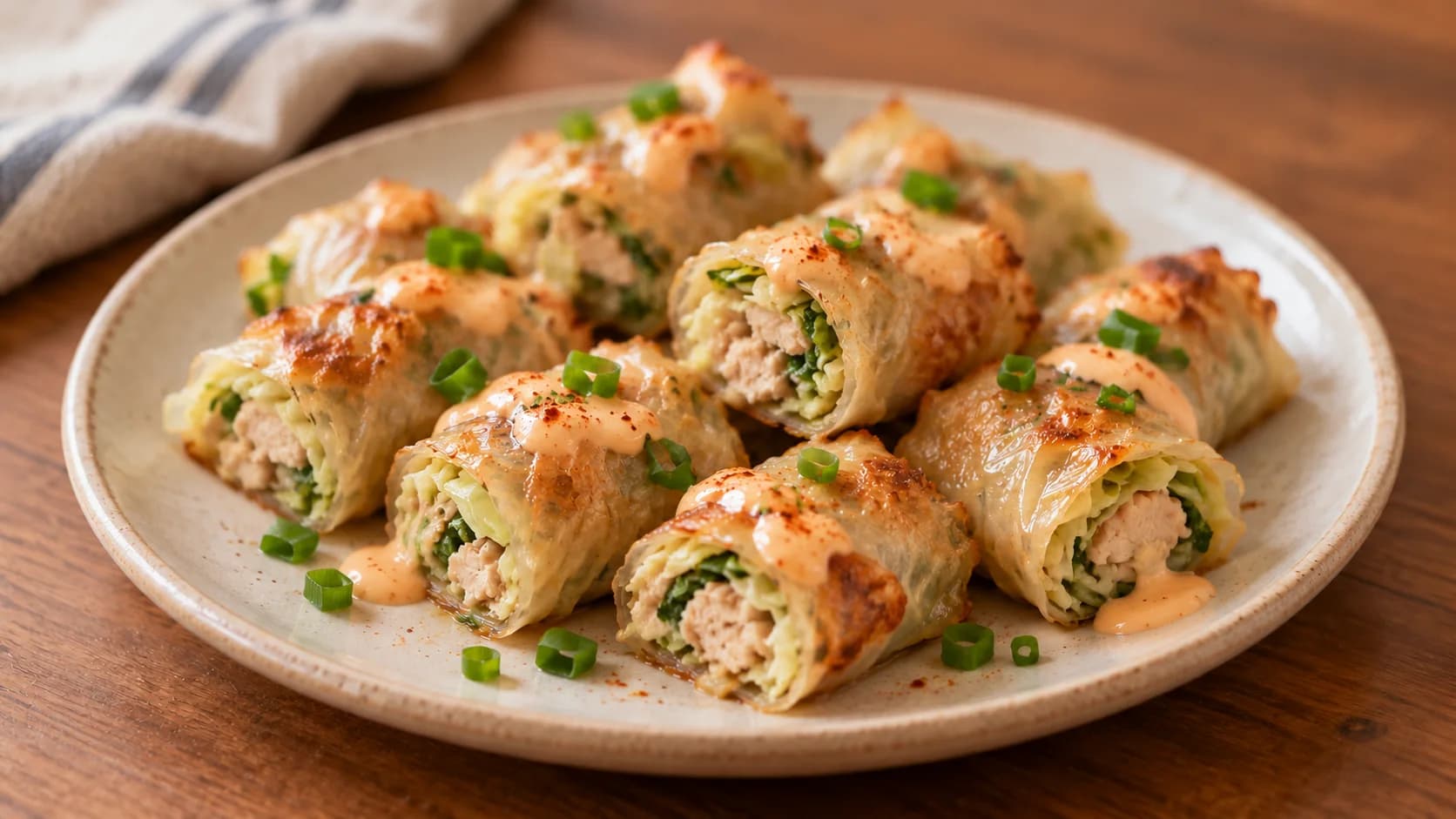
For these chicken bites, the scissors work before the air fryer does. Give yourself a clear run from filling to wrapping to cutting, with somewhere for each piece to land. Bench space belongs in the plan alongside the ingredients.
Set up the bench before wetting a wrapper
Have the mixed filling, scissors, water, oil and basket within reach. Keep one area for wrapping and another for arranging the cut pieces. That separates two jobs you do not want competing for the same patch of worktop.
Dhwani Mehta's rice-paper handling advice is useful here: keep the surface damp or oiled, and remember that a wrapper continues softening after it leaves the water. Her recipe makes different, cooked-tofu parcels; the transferable points are gentle handling, avoiding over-soaking and keeping pieces apart. Its filling and cooking instructions do not apply to the raw chicken below.
Two rolls, about ten small bites
From Soac's published method: 100 g minced chicken breast, 25 g shredded cabbage, 1 teaspoon soy sauce, a little salt and white pepper, 2 rice-paper wrappers, a little extra virgin olive oil, a pinch of paprika, a little mayonnaise and chopped spring onion.
- Mix chicken, cabbage, soy, salt and pepper. Rest briefly until the cabbage softens.
- Pass one wrapper quickly through cold water; lay flat. Place half the filling in a slim lower-middle line, fold the near edge over, sides in, then roll. Repeat.
- Scissor-cut short pieces from an end; oil both faces and separate in the basket.
- Air-fry at 190°C for 11–12 minutes, following the written recipe.
- Rest until the crust firms. Mix paprika with mayonnaise; finish with it and spring onion.
Beside the timer, use a core-temperature check. Hong Kong's Centre for Food Safety specifies at least 75°C for 30 seconds. Probe the thickest chicken centre with a thermometer cleaned and disinfected before and after each use; continue cooking if needed. A browned wrapper does not establish that the filling has reached that temperature.
Save the chicken rice-paper recipe to your collection.
Per roll: 50 g raw chicken and 12.5 g cabbage before seasoning, cut into about five bites. This is a snack batch.
Change the stage that is causing trouble
| What is happening? | What to change |
|---|---|
| The wrapper is getting too soft to handle | Avoid a long soak. Dhwani notes that over-soaking can cause tearing; let the wrapper continue softening on the prepared surface |
| Rice paper clings to the worktop | Prepare a damp or oiled work surface before the next wrapper; handle gently |
| A roll opens while cutting | Cut from an end, as Soac demonstrates |
| Neighbouring pieces join together | Separate them before cooking. Dhwani warns that touching edges can stick and tear; use another batch if they will not fit apart |
Make these changes before the next piece or batch goes in. Check the chicken separately with the thermometer.
Preparation, checking and resting sit outside that air-frying time; plan for the whole job. This is an analysis of published methods and demonstrations, rather than a Nourishible cooking test.