How to stop a stir-fry turning watery
Last updated October 4, 2026
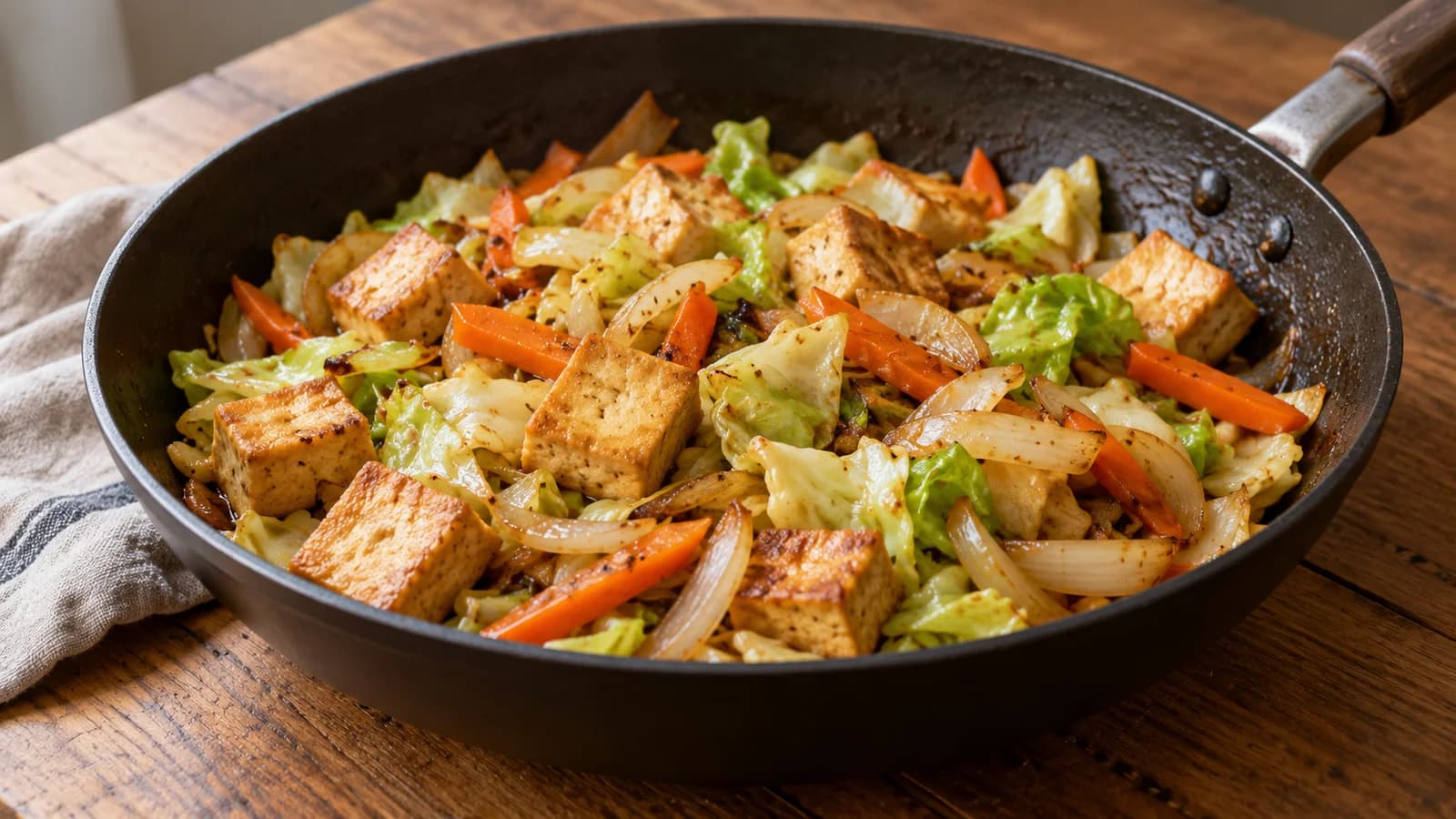
Your stir-fry is nearly ready, but there is a puddle under dinner. To stop a stir-fry turning watery, first note when the liquid appeared: before the sauce, with the vegetables, or after the sauce went in. That tells you which part of the cooking order to change. If the food is already cooked, take it out before adjusting the liquid.
Is the liquid actually a mistake?
Liquid is a problem when it leaves the dish more diluted than the recipe intends. Some stir-fries deliberately use water to soften vegetables and build a sauce, and a saucy dinner does not need rescuing just because you can see liquid.
Good Food's tofu stir-fry is an example. It pats the tofu dry and fries it separately, then adds "a good splash of water" to the vegetables and cooks them 3 to 5 minutes more until tender, before the dressing goes in. Read the whole method before deciding that every stage should look dry, and look at the finish you want: a light coating, a thicker sauce, or enough liquid to spoon over rice.
When does your stir-fry turn watery?
| What you notice | Stage to check | What to change |
|---|---|---|
| A crowded pan is simmering before any sauce goes in | Batch size | Cook in smaller batches and combine them at the end. Aim for a pan no more than a third full |
| Liquid arrives with washed or blanched vegetables | Preparation | Drain them thoroughly before they reach the pan |
| A vegetable releases liquid despite being drained | Cooking order | Sear it alone in a single layer, take it out, and add it back with the sauce. Courgettes need medium heat and 3 to 4 minutes |
| The pan looks right until you pour in the sauce | Sauce stage | Mix and measure the sauce before you start. If it still floods the pan, thicken it with a slurry (below) |
| The food is ready but the sauce is still thin | Finish | Lift out the cooked food and adjust the liquid separately |
The times, ratios and order below come from three pages at The Woks of Life: stir-fry basics, courgettes with garlic sauce and cooking with cornstarch. They are one cook's quantities for those dishes, so treat them as starting points.
What should you prepare before heating the pan?
Drain anything you have washed or blanched, because that water goes straight into the pan. Dense vegetables such as carrots and broccoli may need a 30-second to 1-minute blanch first, so drain them well. Mix the sauce before you start, and set each prepared component beside the hob so you can follow the sequence without anything overcooking while you measure.
For tofu, start with the type the recipe needs. Firm and silken tofu need different handling, so pressing every block is not a general solution.
Drainage will not stop every vegetable releasing liquid. For courgettes, cut them into chunks, spread them in a single layer over medium heat, give them 3 to 4 minutes until lightly browned and soft, and take them out before the sauce goes in. A separate pass gives you control over the order; it will not keep every vegetable crisp.
What cooking order keeps the pan manageable?
Keep the pan to about a third full, and do not double a recipe and cook it all at once, which cools the wok. Cook in this order: meat, then garlic and ginger, then vegetables, with the sauce already mixed. In a wok, start with it clean, dry and very hot, and keep the heat high. In a non-stick or domestic pan, stay within the manufacturer's heating limits. Strong heat is the aim, but a smoking pan is not the measure of success.
Beef yaki udon has no vegetable stage, but it shows the order and a sauce built to coat:
- Prepare the beef marinade and the separate finishing sauce.
- Cook the beef through, then remove it.
- Cook the scallions and add the prepared sauce.
- Return the beef with the noodles and toss to coat.
The recipe cooks the beef until it is "just cooked through" before taking it out, so it only needs a quick toss with the noodles at the end. Keep the finishing sauce separate from the marinade when you set out your bowls. The sauce includes 2 tbsp of water, and the recipe's notes suggest a splash more if the noodles clump, so the water is part of the plan.
How do you rescue food that is already cooked?
Lift the cooked food out onto a plate so it does not keep cooking while you deal with the liquid. If anything is still undercooked, finish cooking it first. If the sauce tastes balanced but is too thin, boil it down on its own in the pan until it coats the back of a spoon, then put the food back for a moment to coat it.
Taste before you reduce. If the sauce is already salty, boiling it down concentrates the salt, so pour some off and accept a less saucy dish. More soy sauce does not fix too much liquid.
When should you use cornflour?
Cornflour suits a sauce that is meant to be thickened. In British recipes it is the starch American recipes call cornstarch.
For a stir-fry sauce, mix equal parts starch and water, a tablespoon of each. The courgette recipe thickens a sauce of about ¾ cup (roughly 180 ml: ½ cup water plus the oyster sauce, vinegar, wine and soy) with 1 tablespoon of cornstarch, and calls it ready when it is "just thick enough to coat a spoon". Good Food's tofu stir-fry uses much less: 1 teaspoon of cornflour stirred into 1 tablespoon of water, tipped into a dressing of 3 tablespoons soy sauce, 1½ tablespoons honey and 1 tablespoon vinegar, then bubbled for 30 seconds.
- Re-stir the slurry just before it goes in, because the starch settles.
- Add about three-quarters of it while stirring, let the sauce cook for 15 to 20 seconds, then judge the thickness before adding more.
- When the sauce thickens, turn off the heat. Cooked on, the starch breaks down and the sauce thins again as it cools.
- Return the food to the sauce briefly to coat it.
Thickening hides the symptom. If the puddle came from crowding or wet vegetables, fix that next time.