How to stop meatballs falling apart
Last updated October 7, 2026
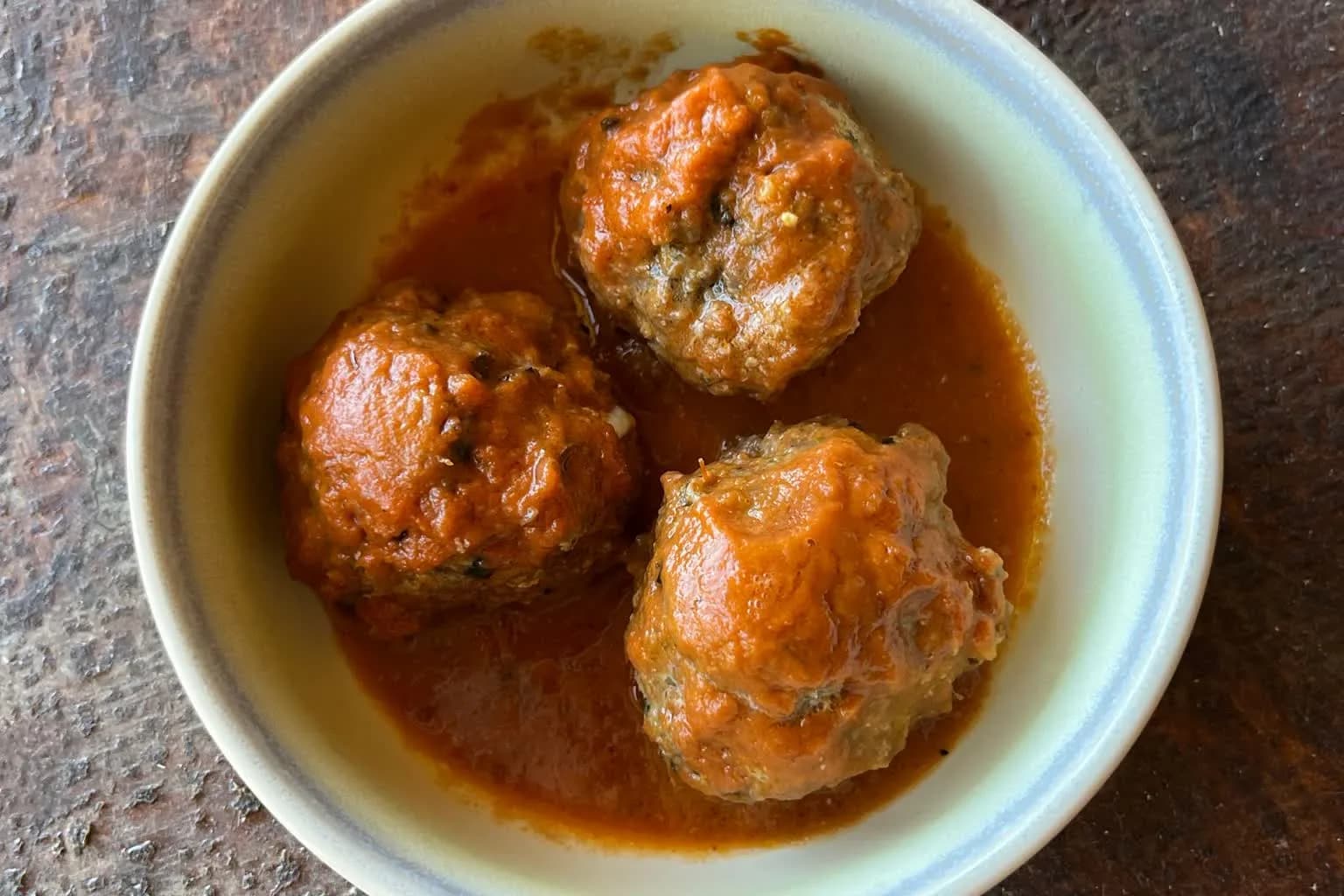
Meatballs split for two different reasons. Either the mixture is too wet or too crumbly to hold together, or it holds fine and breaks when it is turned, stirred or simmered too hard. Sort out which one you have, because the fixes are different.
| What you see | Likely cause | Fix |
|---|---|---|
| Balls are loose and crack or crumble when rolled | Too many dry breadcrumbs for the meat | Use fewer, or switch to a soaked panade at the amounts below |
| Mixture is slack and the balls slump | More than two eggs per pound | Stay within one to two eggs per pound, because more turns the texture soggy |
| Mixture sticks to your hands as you roll | Dry hands | Wet your hands with cold water or oil them lightly |
| Balls go soft or break up in the sauce | Too long in the liquid | Brown first, then simmer for 10 to 15 minutes at most |
The mixture
For each pound (450 g) of mince, use one egg, or two at most. Jessica Gavin's starting ratio is one large egg and half a cup (about 120 ml) of panade per pound.
A panade is bread soaked in milk. Mix 1 cup of 1 cm (1/2-inch) bread cubes with 1 cup (about 240 ml) of milk, leave it for 10 minutes, then mash it to a paste with a fork. That makes enough for about two pounds of mince. The soaked bread holds on to moisture and keeps the meat proteins from tightening up and squeezing it back out, which is why meatballs made with a panade stay tender. Buttermilk, non-dairy milk, stock or broth can stand in for the milk.
Dry breadcrumbs are easy to overdo: too many and the meatballs turn loose and fall apart. They should only soak up liquid, so add a spoonful at a time and stop as soon as the mixture holds a ball.
Mixing and shaping
Mix the mince, egg and panade with your fingers held loosely, lifting and folding rather than squeezing. Tasting Table calls this the claw. Keep the food processor for chopping vegetables, and roll with cold wet hands or lightly oiled ones.
Cooking them
Brown meatballs in a pan before they go into the sauce. This gives a crust and better flavour. Homemade meatballs need no more than 10 to 15 minutes in the sauce; longer and they turn tough and soggy.
Meatballs made from beef, chicken or any other mince have to be cooked through. The Food Standards Agency says the middle of minced meat should reach 70°C for 2 minutes, and that you should see steam rising from the surface and from the middle when cut open, with the meat browned rather than pink. Cut one open to check before serving.
If the mixture still won't hold
If the whole batch crumbles as you roll, the usual culprit is dry crumbs where a soaked panade should be. If it still will not firm up, Tasting Table's rescue is to roll the shaped meatballs in flour before cooking.