How to get crispy roast chicken skin
Last updated October 5, 2026
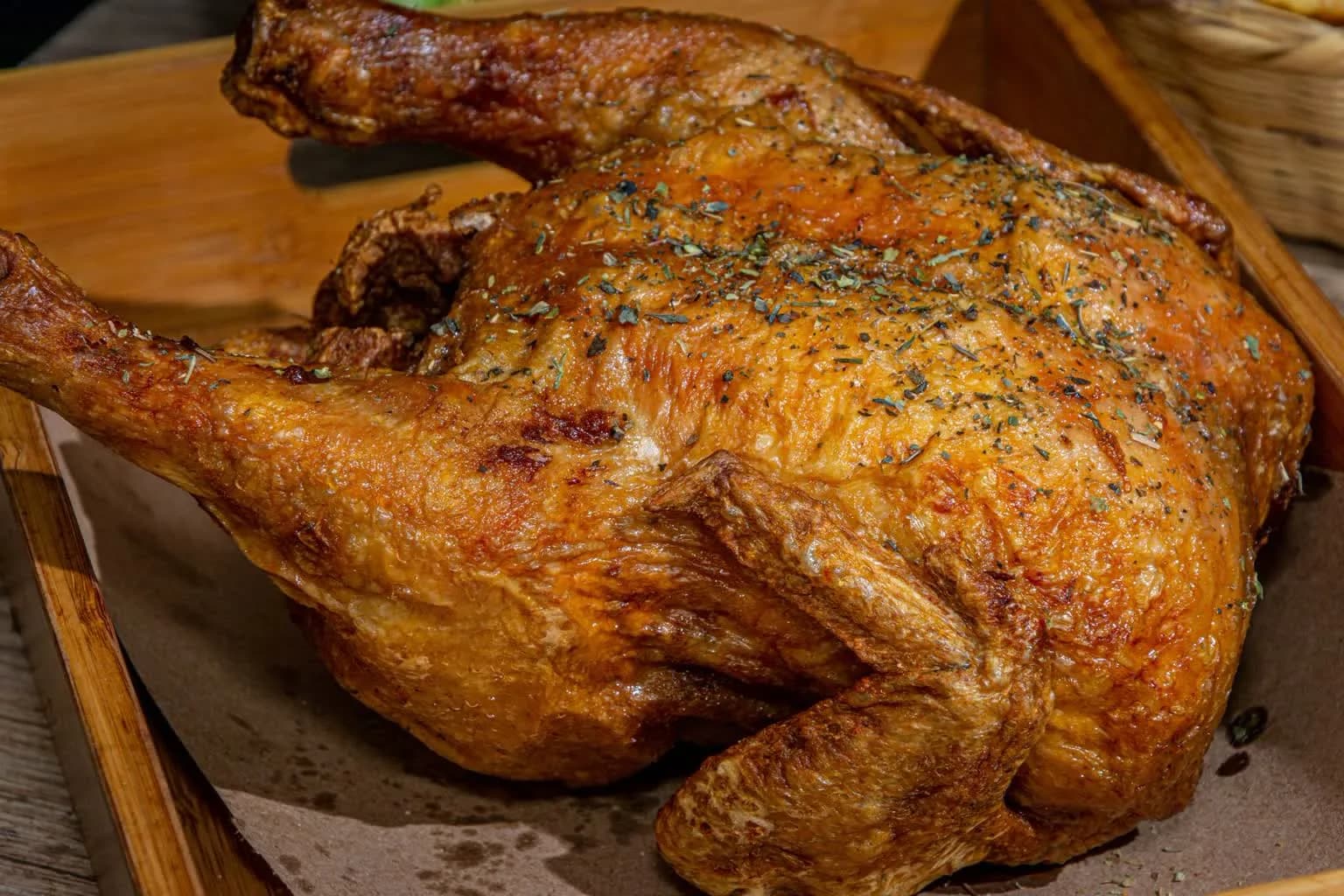
Pat chicken skin dry, keep it exposed to the oven's heat and check the meat is cooked before you serve it. If the skin stays soft, ask where and when it softened: before browning, in a pool of juices, or after the bird came out of the oven. Each needs a different fix.
The method, in order
- Dry the skin. Pat it with kitchen paper just before seasoning. Skin cannot begin to brown until its surface moisture has evaporated, according to America's Test Kitchen, so do not pour stock or water over it.
- Season. Salt the skin evenly. Baking powder is an optional extra, covered below.
- Give it room. Put the chicken on a rack in a roasting tin with space around it, so juices and fat do not collect under the skin and make it wet. Pieces such as thighs go skin side up. America's Test Kitchen starts a whole bird breast side down and flips it halfway through cooking.
- Roast uncovered. As a reference point, BBC Good Food roasts a chicken of about 1.8 kg at 190°C (170°C fan) in the centre of the oven for 1 hour 10 minutes, brushing it twice with butter. If your bird is bigger or was very cold from the fridge, its page says to give it another 10 minutes and test again. That is one recipe's figure for one size, so use the packaging time for other weights; tin, oven and how wet the skin was all move the result. For extra crispness America's Test Kitchen finishes its whole roast chicken with a few minutes at 500°F (260°C); check your oven's maximum before copying that.
- Check it is cooked (below). The skin tells you when to protect it or crisp it further, not whether the chicken is done.
- Rest it. Good Food covers its roast with foil to rest, for a juicier bird. For crisp skin, tent it loosely or leave it uncovered, because trapped steam can soften the skin. Spoon gravy around the meat, not over the skin.
You are looking for a dry surface that has turned deep golden, with no pale damp patches left.
Checking the chicken is cooked
Cut into the thickest part: there should be no pink meat, the juices should run clear and it should be steaming hot all the way through (UK Food Standards Agency). On a whole bird the thickest part is the leg between the drumstick and the breast. Good Food's test is a skewer through the thickest part of the thigh, with the juices running clear. With a thermometer, cook until the thickest part reads 74°C (165°F), away from bone. That is the minimum internal temperature for all chicken, whole or in pieces.
Why is the skin still soft?
| What you see | Likely cause | What to do |
|---|---|---|
| Skin looks pale and damp all over | Surface moisture has not evaporated, or the bird is crowded | Keep roasting uncovered. Next time, pat it dry immediately before seasoning and leave more space in the tin. |
| Top is crisp but the sides or underside are soft | Those areas touch the tin, another piece, or cooking juices | Leave a gap between pieces and lift them on a rack next time. Do not turn crisp skin down into the juices. |
| Skin browned but feels rubbery | Colour developed before enough moisture and fat left the skin | Check the meat is cooked. If it is, give exposed soft areas a short spell under the grill while watching continuously; remove them as soon as they crisp. Next time, loosen the skin from the meat and prick it over the fatty areas so the fat can escape; America's Test Kitchen pokes 15 to 20 holes in the breast and thigh skin. |
| Skin was crisp at the oven, then softened on the board | Steam became trapped against it | Rest the chicken uncovered or only loosely covered. Spoon gravy around the meat when serving, not over the crisp surface. |
A grill can scorch skin quickly, especially close to the element, so stay with it.
What if the skin burns before the meat is cooked?
Reduce the oven temperature and shield only the darkening area loosely with foil. Continue until the meat passes the checks above. A whole bird has thick and thin areas, so its skin can colour before the centre is ready. If one spot repeatedly burns, check whether that part sits closer to the oven's heating element or the bird is too high in the oven.
For the next roast, start at a lower heat or move the shelf lower.
Does baking powder help, and how much should you use?
Baking powder is an optional browning aid, not a rescue for wet skin or a crowded tin. Serious Eats mixes about one part baking powder with three to four parts kosher salt (roughly a teaspoon of powder to a tablespoon of salt) and sprinkles it over the skin. The powder raises the skin's pH and reacts with the bird's juices to make tiny bubbles, which is what gives the crunchier surface. America's Test Kitchen rubs on a salt and baking powder mixture too and reports markedly crispier skin. Neither is a Nourishible test.
Do not swap in baking soda: Serious Eats found it leaves a metallic taste, and America's Test Kitchen a bitter one. If you use a ready-seasoned chicken or a salty rub, account for its salt rather than adding the full salt-and-powder mixture on top.
Both methods lean on an uncovered rest in the fridge before roasting: Serious Eats says 12 to 24 hours and America's Test Kitchen at least 12, with the chicken on a wire rack in a rimmed baking sheet. The UK Food Standards Agency's general advice is to keep raw meat covered on the bottom shelf of the fridge, away from ready-to-eat food, so an uncovered rest is a trade-off for you to choose. If you do it, use a rack over a tray, keep it on the bottom shelf and well away from anything ready to eat. If you would rather stay with the FSA advice, keep the chicken covered, pat the skin dry just before it goes in the oven, and expect less crackle, because the skin starts out wetter. Do not wash raw chicken; splashing spreads germs onto hands, worktops and utensils.
Can you get the skin crisp again after resting?
Sometimes. If the chicken is already cooked and the skin has softened, put individual pieces skin side up in a hot oven or briefly under a closely watched grill until the surface dries again. Keep them out of pooled juices. This can improve the skin, but extra heat can dry the meat, so stop once you have the texture you want. For a whole bird, carve first so you can crisp the skin without reheating the entire roast.
Skin that has come off the meat can be crisped on its own. This leftover chicken soup with crispy-skin crostini bakes sliced skin on bread at 180°C fan for 10 to 15 minutes until crisp, which is that recipe's figure for skin and bread, not for a whole bird.
For chicken thighs the same diagnosis applies: skin side up, with space between the pieces. The guide to 3 chicken dinners that don't taste the same has ideas for the rest of the bird.
Sources
- BBC Good Food: roast chicken
- UK Food Standards Agency: cooking your food
- FoodSafety.gov: minimum internal temperatures for chicken
- America's Test Kitchen: crispy skin on a whole chicken
- UK Food Standards Agency: covered raw-meat storage
- UK Food Standards Agency: raw chicken handling
- Serious Eats: baking powder and poultry skin