When can a baby have lentils?
Last updated September 15, 2026
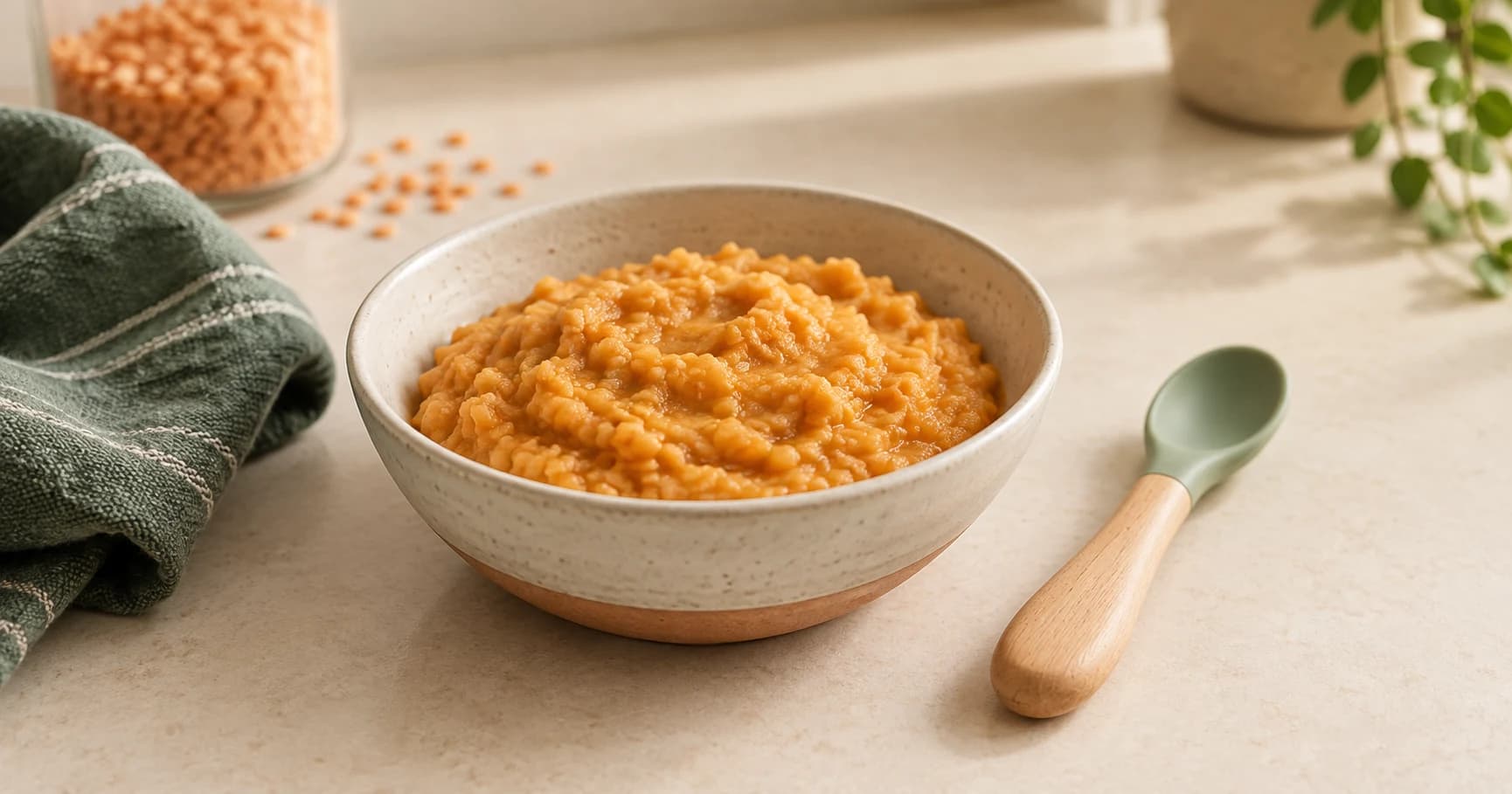
Babies can have lentils from around 6 months, once they are ready to start solid food. Cook them until soft, then adjust the texture to suit your baby: serve a thick mash on a pre-loaded spoon, then leave it lumpier as they progress. Lentil soup can work too, with a few changes to the family pot.
When can a baby have lentils?
You can offer lentils from around 6 months, when your baby starts solid food. The NHS includes lentils among the protein foods suitable from around this age, alongside beans, pulses, meat, fish, eggs and tofu. These foods provide protein and nutrients including iron and zinc.
At first, your baby only needs a small amount of solid food once a day. Breast milk or first infant formula remains their main source of nutrition and their main drink during the first year, so lentils are one food to explore rather than a meal they must finish. A small scoop of thick mash on a pre-loaded spoon is enough for a first try.
The lentil ingredient page keeps the serving guidance in one place. If you are planning the wider first-food stage, the guide to starting baby-led weaning explains readiness and how to begin.
How should you cook lentils for a baby?
Cook lentils until they are completely soft, then mash or blend them to a texture your baby can manage. Red split lentils collapse readily into a thick purée; green and brown lentils tend to hold their shape, so press them with a fork or stir them into a soft mash when you want less texture.
Start by checking the packet because cooking times vary. Rinse dried lentils, cover them with plenty of water and simmer until there is no firm centre. If the mixture is too stiff, loosen it a little with water. If it is too runny, simmer it uncovered or stir it into another soft food. The useful test is the finished texture, rather than whether you used dried or tinned lentils.
Tinned lentils are convenient if the label says no added salt. Drain them, then warm and mash them. If you cannot find a no-added-salt tin, use dried lentils instead. Do not add salt to their cooking water: the NHS says not to add salt to a baby's food or cooking water.
How do you serve lentils for baby-led weaning?
Make lentils easy to scoop by serving them as a thick mash on a pre-loaded spoon. Loose individual lentils are harder for a new eater to gather, even when they are soft.
Baby-led weaning can still include a spoon. The NHS suggests giving your baby a spoon and letting them try feeding themselves, and it encourages moving towards mashed, lumpy and finger foods as they are ready. Load the spoon, put it within reach and let your baby bring it to their mouth. A second spoon can help if the first one stays firmly in their hand.
Texture matters more than keeping every serving in the same format. You can offer a smooth lentil purée one day and a thicker mash another, following your baby's developing ability to manage lumps and pick food up.
Can babies have lentil soup?
Once they are ready to start solids, babies can have lentil soup from around 6 months if the lentils and vegetables are cooked soft and the soup is made without added salt, stock cubes or gravy. The NHS advises against adding salt to a baby's food or cooking water and says not to use stock cubes or gravy because they are often high in salt.
The simplest family method is to cook a mild base without stock cubes, take out the baby's portion, then season the rest of the pot for everyone else. Make the baby's portion thick enough to stay on a spoon; you can mash it with a fork or briefly blend it. If a finished family soup already contains stock or added salt, make a small separate portion rather than trying to dilute it at the table.
Soup does not need to be served as a bowl of thin liquid. A thick scoop on a plate or a pre-loaded spoon is usually less frustrating for a baby learning to feed themselves.
What can you mix with lentils?
Mix lentils with a familiar soft food to change the flavour and make the texture easier to scoop. Mashed carrot, sweet potato or broccoli can thicken the lentils; cooked tomato or a little water can loosen them. You can also stir soft lentils through rice or another family meal before adding salt to the adult portion.
Keep the first combination simple enough that you can see whether the texture works. Once you know the consistency your baby manages well, the same lentil base can move between a smooth purée, a rough mash and a thick soup. For more context on why lentils fit into a varied weaning menu, see iron-rich first foods for babies.
Which lentil recipe is easy to adjust?
A soft lentil and vegetable purée is easy to adjust because you can change its thickness one spoonful at a time. This lentil and carrot purée uses a short ingredient list and is tagged for 6 months:
For a heartier option, this beef, sweet potato and lentil purée is made without added salt. It shows how lentils can become part of a mixed meal rather than a separate side:
Whichever recipe you use, judge the lentils in the bowl in front of you. Cook them longer or mash them further if they still have a firm centre, then loosen or thicken the meal until it sits on a spoon without running straight off.
The short version
Babies can have lentils from around 6 months. Cook them until soft and begin with a mashed, blended or thick scoopable texture, moving towards lumpier food as your baby is ready. For lentil soup, leave out added salt and stock cubes, remove the baby's portion before seasoning the family pot, and serve it thick enough to stay on a spoon.