What to cook with aubergines
Last updated October 8, 2026
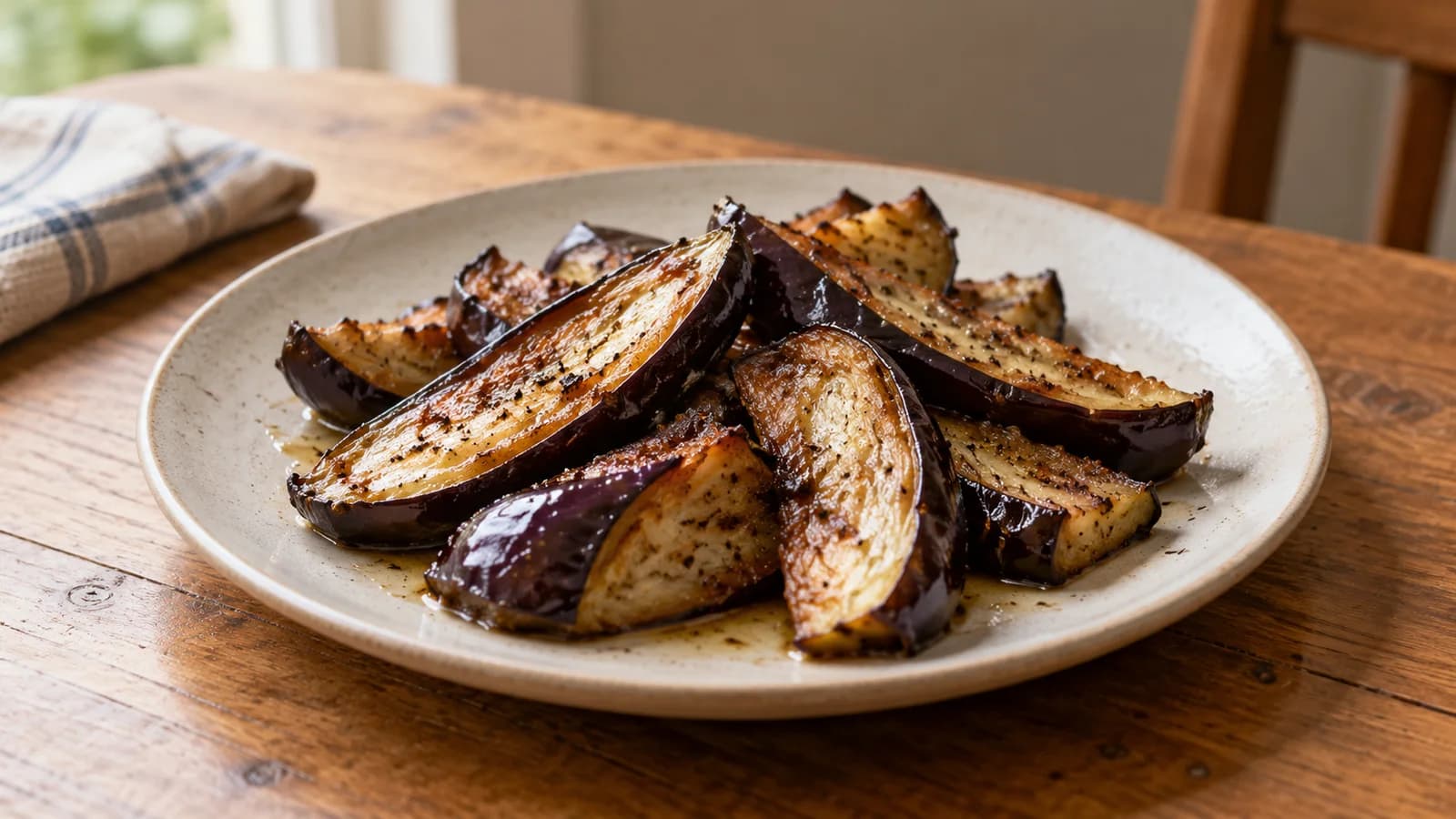
The texture you want decides how to cook an aubergine. Brown wedges and finish them in a sauce to spoon over rice, cook scored halves under a lid for a soft side dish, or roast them until the flesh scoops out for a dip. Each has a recipe below.
Aubergine appears as eggplant in many recipe titles, so search under both names.
| Desired finish | Shape and method | How to make a meal of it |
|---|---|---|
| Browned pieces coated in sauce | Cut into wedges, pan-fry in batches, then finish in the sauce | Spoon over rice |
| Soft halves that stay together on the plate | Halve lengthways, score the flesh and cook in a covered pan | Serve beside the rest of dinner |
| Soft flesh to blend into a dip | Roast halves until the flesh scoops easily | Blend with chickpeas and tahini; serve with flatbread |
| Browned slices for a plate or sandwich | Cut into slices, brush with oil and grill | Serve on a plate or layer into bread with a dressing |
The last row has no recipe here; Purdue Extension's grilling instructions brush the aubergine with oil and flip it after about 2 to 3 minutes. The other three each have a recipe below.
Soft halves
Scored halves cooked under a lid soften inside and keep their shape. Melt-in-the-Mouth Grilled Eggplant does this, and despite the title it is a hob recipe. One large aubergine (150 to 200 g) is halved lengthways, scored in a crosshatch, coated in 1 tablespoon of olive oil and cooked cut side up, then turned, for 2 minutes a side with a lid on. White dashi, water and grated garlic go in at the end, and you toss the halves until the scored cuts soak up the sauce. The recipe says it serves 2 and takes about 15 minutes.
The recipe gives 4 minutes in all, but aubergines differ in size, so test the centre before you plate. If it is still firm, keep cooking gently; a browned cut face does not tell you the middle is ready. It works as a side when the rest of dinner is already planned. Check the white dashi label if you need the dish to be vegetarian.
Browned pieces to spoon over rice
Sichuan Fish-Fragrant Eggplant Claypot uses two aubergines cut into wedges, soaked in salted water so they don't turn brown, then pan-fried in batches over medium-low heat; the recipe's own advice is to brown them well in a short time. Garlic, ginger, spring onion, pork and salted fish cook in the same pan, the aubergine goes back in with a cornstarch-thickened sauce of water, soy sauce, oyster sauce and sugar, and it simmers until the sauce coats everything. The recipe estimates 20 minutes.
It contains 200 g of minced pork, salted fish and oyster sauce, so it is not vegetarian; read the ingredient list, not the title. The batch method is the part worth borrowing for any panful: brown one batch, lift it out, brown the next, then build the sauce in the same pan.
Roasted flesh for a dip
When tenderness matters more than shape, roast the halves and scoop. Chickpea and Eggplant Hummus with Homemade Flatbread scores a 1 lb (about 450 g) aubergine, salts it for 10 minutes and pats it dry, then roasts the halves with a head of garlic in the air fryer or oven at 190°C for 20 minutes. The soft flesh and roasted garlic are blended with cooked chickpeas, tahini, lemon, cumin and olive oil. It is a chickpea hummus with aubergine in it, not a plain aubergine dip.
This is the project of the three. It starts from dried chickpeas, soaked overnight and simmered with baking soda for about 30 minutes, and the flatbread is made from scratch afterwards. Go by feel on the aubergine rather than the clock: Purdue Extension's baking instructions (350°F, about 25 to 30 minutes) are for a cooler oven than the recipe's 190°C, and the flesh should scoop easily before it goes in the processor. Put the dip in a bowl and use the flatbread for scooping.
What if it is browned outside but firm inside?
Give the centre a gentler cooking stage rather than chasing more colour. The Woks of Life notes that a large globe aubergine takes longer to cook than slender Chinese or Japanese types because of its thicker skin and denser flesh.
Check a thick piece, or the centre of a half. If it is browned but still firm, lower the heat, add a few tablespoons of water and cover the pan so it finishes in steam, as The Woks of Life suggests for its garlic-sauce aubergine. Roasted halves for a dip just need more oven time. Once the flesh is tender, move on to the sauce or seasoning.
Don't reach for more oil whenever the pan looks dry; Purdue Extension notes that aubergine tends to absorb oil, so let the lid do the work.
Do you need to salt aubergines?
It is the cook's call, and the sources differ: Purdue Extension says to salt an eggplant about an hour before cooking, while The Woks of Life says its garlic-sauce aubergine needs no salting. The recipes here each have a reason of their own. The hummus recipe salts the cut aubergine for 10 minutes to draw out moisture and bitterness; the claypot recipe soaks the wedges in salted water to stop them browning; the grilled halves recipe doesn't salt at all. Follow the one you are cooking.