How to thicken soup without cream
Last updated October 6, 2026
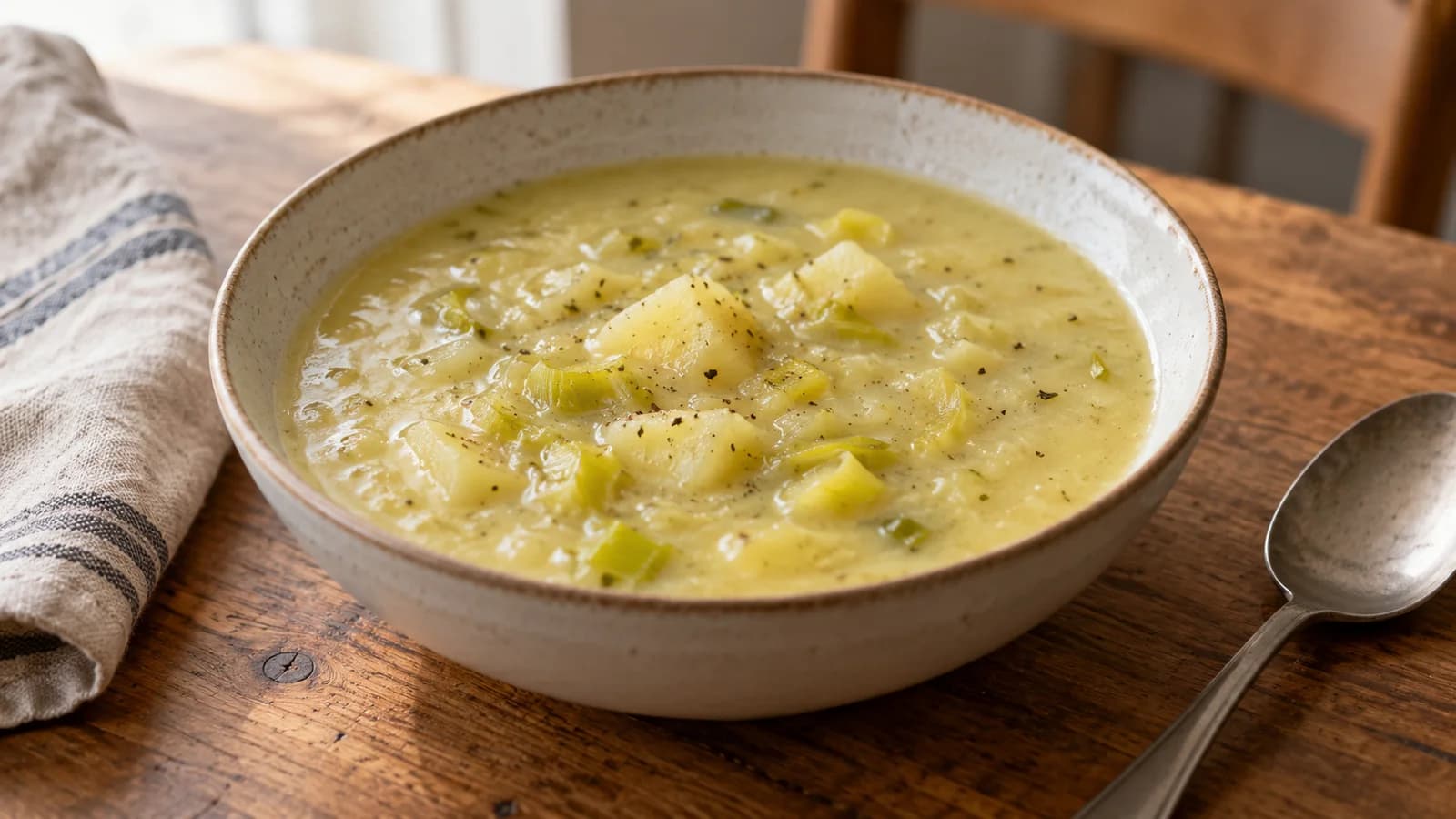
Your soup tastes right, but the spoon comes up mostly broth. To thicken soup without cream, first decide whether you want to change the pieces already in the pan, add another ingredient or keep the chunks intact. Blend some cooked potato or beans for a fuller base, add cooked beans when their flavour fits, or use a cold cornflour slurry for a more controlled change to the liquid.
Choosing a route
Blending uses the existing solids, beans add substance and their own flavour, and a slurry lets you leave the pieces alone. A clear broth you enjoy may need no change at all.
| What you have | Route to consider | What you get |
|---|---|---|
| Soup with very soft cooked potato | Blend all or part of it | A smooth base; keep some pieces back if you like |
| A soup whose flavour suits cooked white beans | Blend some beans into the broth | Bean flavour and a fuller base; keep some whole beans back |
| A soup whose chunks you want to keep | Add a cold cornflour slurry gradually | Thicker liquid with the pieces left alone |
| A broth you enjoy drinking | Leave it brothy | Nothing to do |
The potato route comes from Sarah Nevins's leek and potato soup and the bean route from Jeanine Donofrio's white bean tomato soup. Pick one for the pan you have.
Blend what is already in the pan
Very soft potato is the easiest thickener already in the pan. Sarah Nevins simmers 2 lb (about 1 kg) of diced potato in 6 cups (1.4 litres) of stock for 20 minutes, until very soft, fishes out the bay leaves and blends the soup. The recipe serves four to six, and she says the creamy texture comes almost entirely from the blended potatoes, with no cream or milk.
For a partly smooth soup, set aside the pieces you want to keep, blend the remaining soup and return the reserved pieces; she also suggests leaving a few potato pieces intact for a chunky soup. For a smooth bowl, blend the whole batch. Blend hot soup in batches if it would overfill the jug, and pour carefully; check your blender's instructions for hot liquids.
Decide what earns its place as a chunk before blending. Once everything is smooth, the spoonful of potato you meant to keep has gone with it.
Add beans
Add cooked beans when you want their flavour to become part of the soup. Jeanine Donofrio's tomato soup, which serves four, uses 1½ cups of cooked cannellini beans (about 360 ml, taking a US cup as 240 ml): half goes into the blender with the soup base and the other half goes in whole. That gives you a bean-thickened base with pieces left to eat.
The recipe includes optional cashews, but they can be left out. If the blended soup is too thick, add a little more broth or water. If beans are the point of the meal rather than a thickener, the bean and lentil dinner guide has more ideas.
Use a cornflour slurry
Cornflour is the British name for what US recipes call cornstarch, the starch used below. Whisk it with cold or room-temperature water until smooth. Namiko Hirasawa Chen's beginner ratio is 1 tablespoon of starch to 2 tablespoons of water, and that is the unit she works in: add it a spoonful at a time and look at the soup before adding the next.
- Re-whisk just before using; starch settles.
- Set the heat to medium (medium-low if you are new to it) as the soup nears the end of cooking.
- Drizzle in a little slurry while stirring, then check the soup before adding more.
- Take the pan off the heat when the soup is close to your chosen thickness; it keeps thickening off the heat.
Her slurry guide says to mix with cold or room-temperature water because hot water thickens the starch instantly, and not to add dry starch straight to the soup. Cook for no more than 5 minutes after adding the slurry: cornstarch can thin out again if it is overcooked. She also uses potato starch in the same ratio, but says it can weep and lose its texture once cooled, while cornstarch holds up better, so cornflour suits soup you will keep for later.
Fixing the texture
One change at a time, so you can tell which one worked.
| What you see | Next move |
|---|---|
| Blended bean soup is too thick | Add broth or water gradually, as the bean recipe advises |
| Cornflour-thickened soup is too thick | Add water in small amounts |
| A slurry has barely changed the soup | Make a fresh slurry and add it gradually; it keeps thickening off the heat, so check before adding more |
| The broth is pleasant and the pieces are satisfying | Stop; a thick base is a preference |
Or leave it chunky
Not every soup needs a thicker base. The Mediterranean lentil soup with preserved lemon and herb oil cooks lentils until tender, removes its herb bundle and blends nothing. It finishes with lemon, herb oil and, if you like, a spoonful of plant-based yoghurt sauce, so the bowl gets its finish from toppings rather than a thicker base.