Cooking with less saturated fat: 3 dinners in 60 minutes
Last updated October 7, 2026
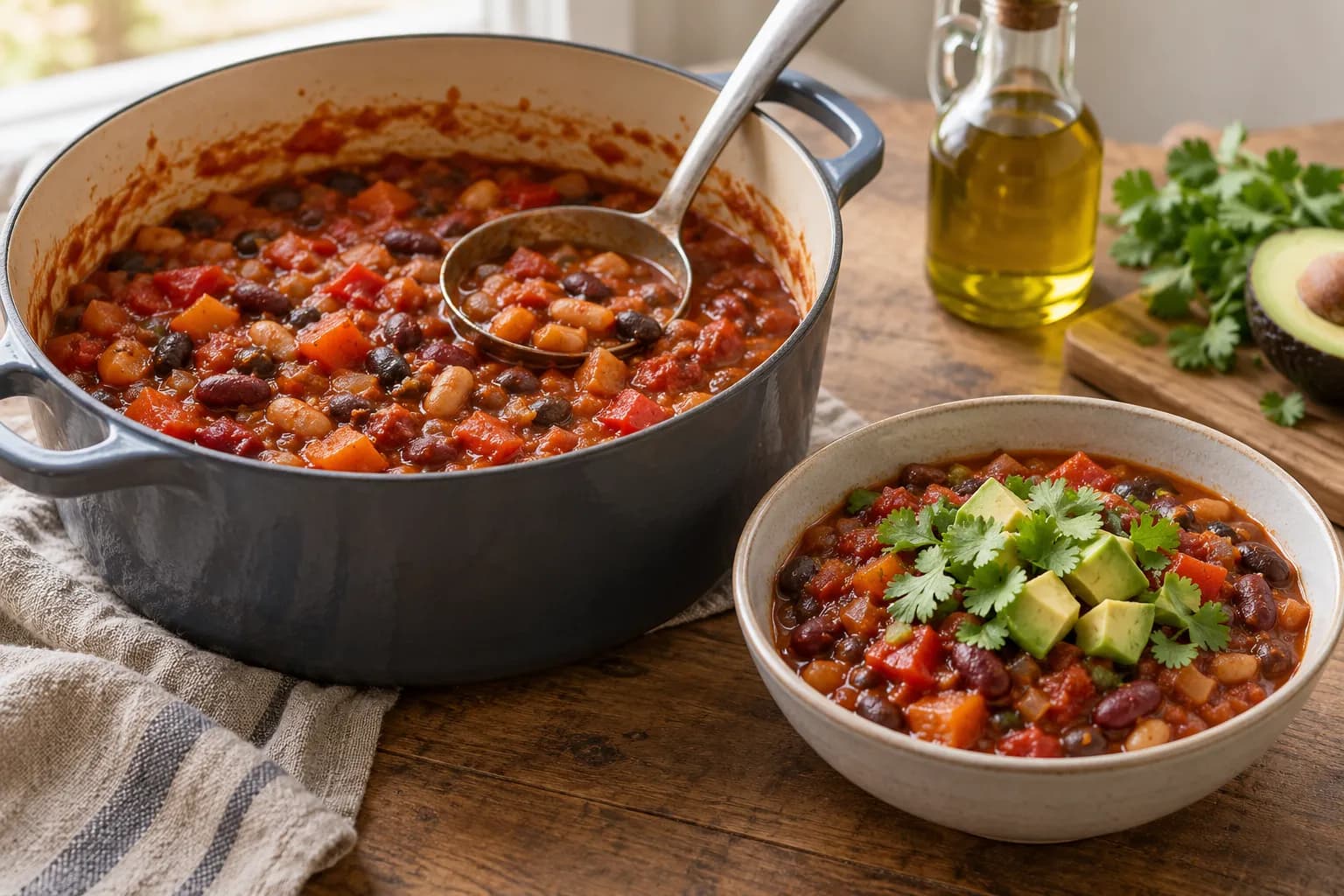
The NHS names the usual sources of saturated fat in cooking: butter and other solid fats, cheese, cream, fatty cuts of meat and some oils. Those are the lines to check in a recipe before you cook. The three dinners below show what each one does with them. They were chosen because each has a plant-based protein, cooks in oil rather than butter, cream or coconut milk, takes 35 to 45 minutes as written, and comes with a saturated fat figure published by its creator.
Which cooking choices change the fat in a dinner?
Look at what you cook in, what you finish with, the protein and what the sauce is built on. The NHS lists "butter, ghee, suet, lard, coconut oil and palm oil" among the sources of saturated fat, alongside fatty cuts of meat, cheese, cream, crème fraîche and sour cream. The cooking-fat, cooking-method and meat rows come from the NHS list of tips for cutting down on fat in general; the cheese and sauce rows are about saturated fat specifically.
| Choice | What the NHS says | Where to look in a recipe |
|---|---|---|
| Cooking fat | Replace saturated fat with some unsaturated fat; measure oil with a teaspoon or use an oil spray | The oil in the first step, and whether the recipe gives an amount |
| Cooking method | "grill, bake, poach or steam food rather than frying or roasting" | Whether the protein is baked, simmered or fried |
| Cheese and cream | Use a strong-tasting cheese so you need less | Garnishes, which are often listed with no amount |
| Sauce base | A tomato-based pasta sauce is lower in saturated fat than a creamy or cheesy one | Cream, cheese or coconut milk in the sauce |
| Meat | Trim visible fat and take the skin off poultry before cooking | The cut or the lean percentage |
The NHS also gives daily limits: the average man should eat no more than 30g of saturated fat a day and the average woman no more than 20g. Those limits cover everything you eat and drink in a day, so a single dinner is only a part of them.
The NHS cholesterol page lists "olive oil, rapeseed oil and spreads made from these oils" and oily fish such as mackerel and salmon among foods to eat more of.
What each dinner cooks with
The table sets out the time, the fat and dairy in each recipe, and each creator's own estimates of calories and saturated fat per serving. The last column divides the saturated fat figure by the NHS daily limits and rounds to whole numbers; 4.5 g against 20 g is 22.5%.
| Dinner | Total time | Main cooking fat as written | Dairy | Calories (creator's estimate) | Saturated fat (creator's estimate) | Share of 20 g / 30 g |
|---|---|---|---|---|---|---|
| Vegetarian three-bean chili (6 servings) | 45 min | 2 tbsp extra-virgin olive oil | Optional sour cream and grated cheese garnishes, no amounts given | 409 kcal, Downshiftology | 1 g, does not say whether the optional garnishes are included | 5% / 3% |
| Red lentil bolognese pasta (2 servings) | 35 min | 1 tsp vegetable oil, plus ½ cup (120 g) vegan green pesto | None | 900 kcal, Pick Up Limes | 4.5 g, Pick Up Limes | 23% / 15% |
| Gochujang tempeh bowl (4 servings) | 45 min | 2½ tbsp vegetable oil, plus sesame oil and sesame paste | None | 752 kcal, Pick Up Limes | 5.4 g, Pick Up Limes | 27% / 18% |
Each creator decides what a serving is, and the calories are estimates too, so a serving of the bolognese (900 kcal) is more than twice the chili (409 kcal) in energy. Read the saturated fat figures with that in mind. A garnish of cheese or sour cream on the chili would add to its 1 g, by an amount no source here gives. For how percentages of energy and weight work, see understanding macros.
What each dinner does differently
Vegetarian three-bean chili: the olive oil is measured, the garnishes are not
The chili cooks its vegetables in 2 tablespoons of olive oil, then simmers everything for 30 minutes with no frying step for the protein, because the beans come from tins. The place saturated fat can arrive is the topping. The recipe lists sour cream and grated cheese as optional garnishes with no amounts. If you use cheese, the NHS suggestion is a strong-tasting one so a smaller amount carries the flavour.
Red lentil bolognese pasta: no cream or cheese in the sauce
The sauce is built on red lentils and tomato with no cream or cheese, which is the NHS's tomato-over-creamy swap. The fat is a teaspoon of oil for the onion and half a cup (120 g) of vegan green pesto stirred in at the end. Half a cup of pesto is the biggest fat-bearing ingredient by quantity, so its label tells you what it adds. The oil is listed only as "vegetable oil", and the NHS names coconut oil and palm oil among saturated fat sources, so check the label of the one you use.
Gochujang tempeh bowl: baked, with a sesame dressing
The tempeh is tossed in oil and baked for 16 to 18 minutes, then coated in sauce for a further 7 to 9, so it is baked rather than fried. The chili's vegetables and the bolognese's onion are cooked in oil in a pan, so the oil in those two is the amount to measure. The fat comes from the vegetable oil, the toasted sesame oil in the sauce and dressing, and the Chinese sesame paste in the dressing, for which the recipe notes tahini as a substitute. There is no dairy in the bowl. The edamame salad and rice make up the rest of the plate.
For more pulse-based dinners, see bean and lentil weeknight dinners.